Introduction
If you’ve ever tried to write content for your website, you’ve probably run into the term “keywords search volume” at some point. It sounds like a technical metric, but it’s really just a simple number that tells you how many people are searching for a specific word or phrase every month. Understanding this number can completely change how you plan your content, and in this article, we’ll break down everything you need to know about it in plain, simple language.
What Does Keywords Search Volume Actually Mean
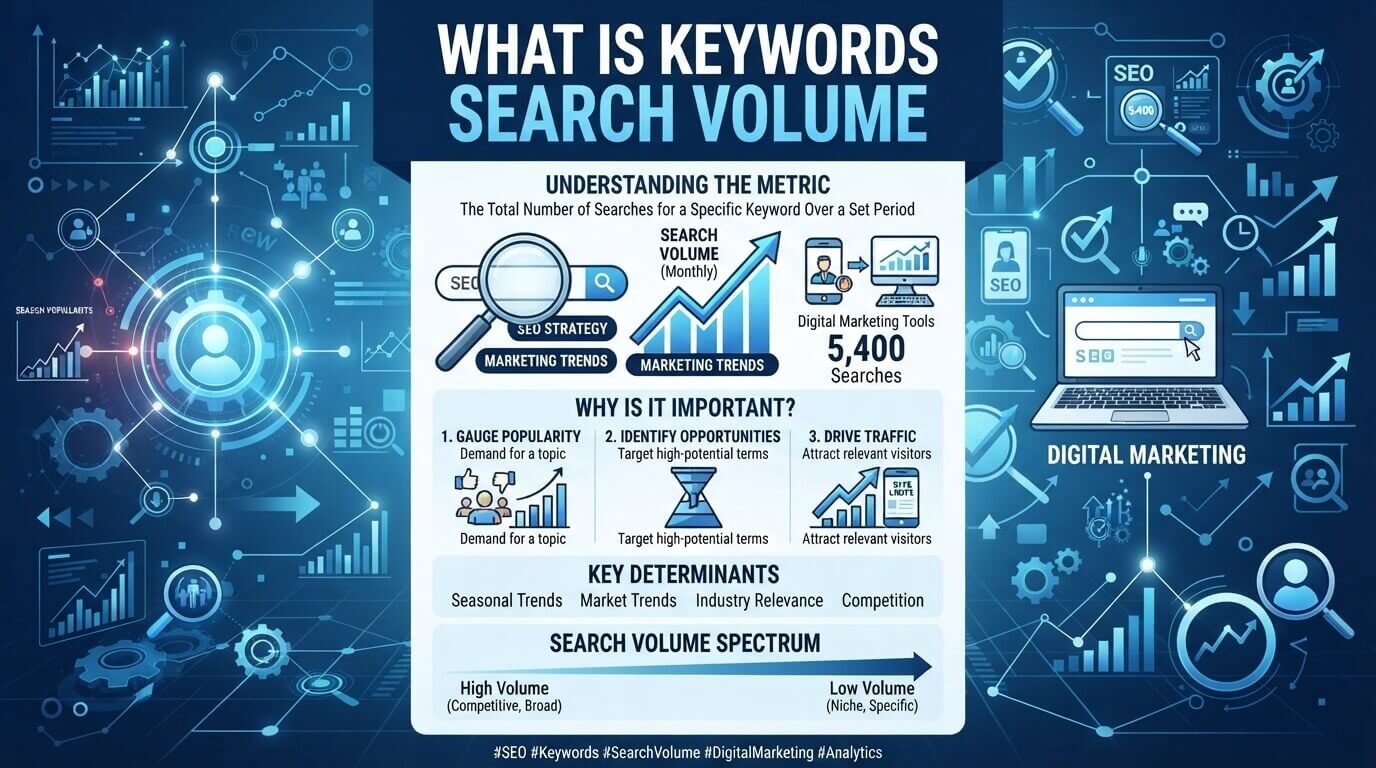
Keywords search volume refers to the average number of times a specific keyword or phrase is typed into a search engine over a set period, usually measured monthly. For example, if the phrase “best running shoes” gets searched 10,000 times a month, that’s its search volume. This number gives you a rough idea of how popular a topic is among real people searching online, and it’s one of the first things most content creators check before writing anything new.
Why Search Volume Is Important for Content Creators
When you’re deciding what to write about, search volume helps you avoid wasting time on topics nobody is actually searching for. If you write a detailed article about something with almost zero search volume, you might create great content that very few people ever find. On the other hand, targeting keywords with healthy search volume means there’s already demand, and your content has a real chance of reaching an audience that’s actively looking for answers.
How Search Volume Is Calculated


Most SEO tools calculate keywords search volume by pulling data from search engines over the past twelve months and then averaging it out. This gives a more stable number than just looking at a single month, since search behavior can spike or drop depending on seasons, trends, or current events. Tools like Google Keyword Planner, Ahrefs, and Semrush all use slightly different data sources, which is why you sometimes see different numbers for the same keyword across different platforms.
The Difference Between High and Low Search Volume Keywords
High search volume keywords are terms that a large number of people search for every month, often in the thousands or even millions. Low search volume keywords, sometimes called long-tail keywords, might only get a few dozen or a few hundred searches, but they’re usually far easier to rank for. Many successful websites actually build their traffic through dozens of these smaller, low-competition keywords rather than chasing a handful of massive ones.
Why High Volume Doesn’t Always Mean Better
It’s tempting to assume that chasing the highest possible search volume is always the smartest move, but that’s not quite true. High volume keywords usually come with intense competition, meaning established websites with years of authority are already ranking for them. A newer or smaller website trying to compete directly for these terms often struggles to break through, no matter how good the content is.
The Role of Keyword Difficulty Alongside Search Volume
Search volume should never be looked at alone. Keyword difficulty, which measures how hard it is to rank for a specific term, works hand in hand with search volume to give you the full picture. A keyword with decent search volume but low difficulty is often a much smarter target than one with huge volume and brutal competition, especially if your website is still growing its authority.
How to Find Keywords Search Volume Data
There are plenty of tools available to check search volume, ranging from free options to paid platforms. Google Keyword Planner is a solid free starting point, though it was originally built for advertisers. Dedicated SEO tools like Ahrefs, Semrush, and Ubersuggest offer more detailed insights, including historical trends, related keywords, and difficulty scores, all in one place.
Search Volume Trends Over Time

Search volume isn’t fixed forever. Some keywords stay steady year-round, while others spike dramatically during certain seasons or events. A keyword like “Christmas gift ideas” will naturally see huge volume in November and December, then drop sharply in the months after. Paying attention to these trends helps you plan content ahead of time so it’s ready right when demand peaks.
Local Search Volume Versus Global Search Volume
Many tools let you check search volume on both a global and a local level. If your business only serves a specific city or country, global numbers can be misleading since they include searches from regions you’ll never actually reach. Always check local search volume when your audience is tied to a specific location, as it gives a far more accurate picture of real opportunity.
How Search Volume Connects to User Intent
A keyword’s search volume tells you how many people are searching, but it doesn’t tell you why they’re searching. This is where user intent comes in. Someone searching “buy running shoes” clearly wants to make a purchase, while someone searching “how running shoes should fit” is likely still researching. Matching your content to the intent behind a keyword matters just as much as the volume number itself.
Long-Tail Keywords and Their Hidden Value
Long-tail keywords are longer, more specific phrases that usually carry lower search volume individually. However, when you add up dozens of long-tail keywords across a website, they can bring in more consistent traffic than chasing a single high-volume term. These keywords also tend to attract visitors who know exactly what they want, which often leads to better engagement and conversions.
Common Mistakes People Make With Search Volume
One common mistake is only targeting keywords with huge search volume while ignoring difficulty completely. Another mistake is checking search volume once and never revisiting it, even though search behavior shifts over time. A third mistake is ignoring search intent entirely and writing content that technically matches the keyword but doesn’t actually answer what searchers are looking for.
How to Use Search Volume in Your Content Strategy

A smart content strategy mixes keywords of different volume levels. Start with a few medium-volume keywords that match your website’s current authority, then build supporting content around related long-tail terms. Over time, as your site gains trust and backlinks, you can gradually start targeting higher-volume, more competitive keywords with a realistic chance of ranking.
Tools Beyond the Basics for Tracking Search Volume
Beyond the well-known tools, many website owners also use Google Trends to spot rising topics before they become overly competitive. Getting ahead of a keyword before its search volume explodes can give your content a major head start, since you’ll already be established by the time competition catches up.
Why Search Volume Alone Isn’t a Complete SEO Strategy
Search volume is just one piece of a much larger puzzle. Quality content, strong backlinks, fast page speed, and good user experience all play a role in how well a page actually performs. Treating search volume as the only metric that matters can lead to content that technically targets the right words but fails to deliver real value to the people reading it.
Final Thoughts on Keywords Search Volume
Understanding keywords search volume gives you a genuine advantage when planning content, but it works best when combined with difficulty scores, search intent, and your own website’s current strength. Rather than chasing the biggest numbers, focus on realistic, well-matched keywords that align with what your audience actually needs, and let strong, helpful writing do the rest of the work.
1 thought on “What Is Keywords Search Volume and Why It Matters for SEO”