Introduction
Learning How to Count Keywords in WordPress is an important step for bloggers, website owners, and digital marketers who want to improve their website content. Keywords help search engines understand the subject of a webpage and connect useful information with people searching online. When you publish an article, checking keyword usage can help you understand whether your main topic is clearly explained and whether certain phrases are repeated unnecessarily. Many beginners think that keyword optimization requires expensive software or advanced technical knowledge, but the process can actually be simple. You can use free online tools, browser search features, and WordPress SEO plugins to review your content. This guide explains How to Count Keywords in WordPress with easy methods, practical examples, and useful tips that can improve your content editing process.
1. What Are Keywords in WordPress?
Keywords are words or phrases that describe the main subject of a webpage or blog post. For example, if you publish an article about website optimization, relevant keywords might include SEO tools, keyword research, content analysis, and search engine optimization. Before learning How to Count Keywords in WordPress, it is important to understand that keywords should represent the real subject of your content. They help you organize your writing and explain topics clearly to visitors. Choosing suitable keywords before writing also makes it easier to create focused articles that answer the questions your audience wants to understand.
2. Why Is Keyword Counting Important?
Keyword counting helps writers understand how frequently particular words and phrases appear in an article. This information is useful when reviewing long blog posts because unnecessary repetition can make content difficult to read. Understanding How to Count Keywords in WordPress allows you to check your writing before publishing and identify phrases that may need editing. It can also help you review whether your main topic is covered throughout the article. However, remember that a high keyword count does not automatically improve Google rankings. Helpful information, natural language, and search intent are more important.
3. How to Count Keywords in WordPress Easily
There are several simple methods available for checking keywords in WordPress content. You can copy your article into an online keyword counter, use the search feature in your browser, or install an SEO plugin that offers content analysis. Each method has different advantages, depending on how often you publish articles and what information you need. If you are learning How to Count Keywords in WordPress for the first time, an online tool is a convenient starting point. It does not require technical knowledge and can help you review your article within seconds.
4. Use an Online Keyword Count Checker
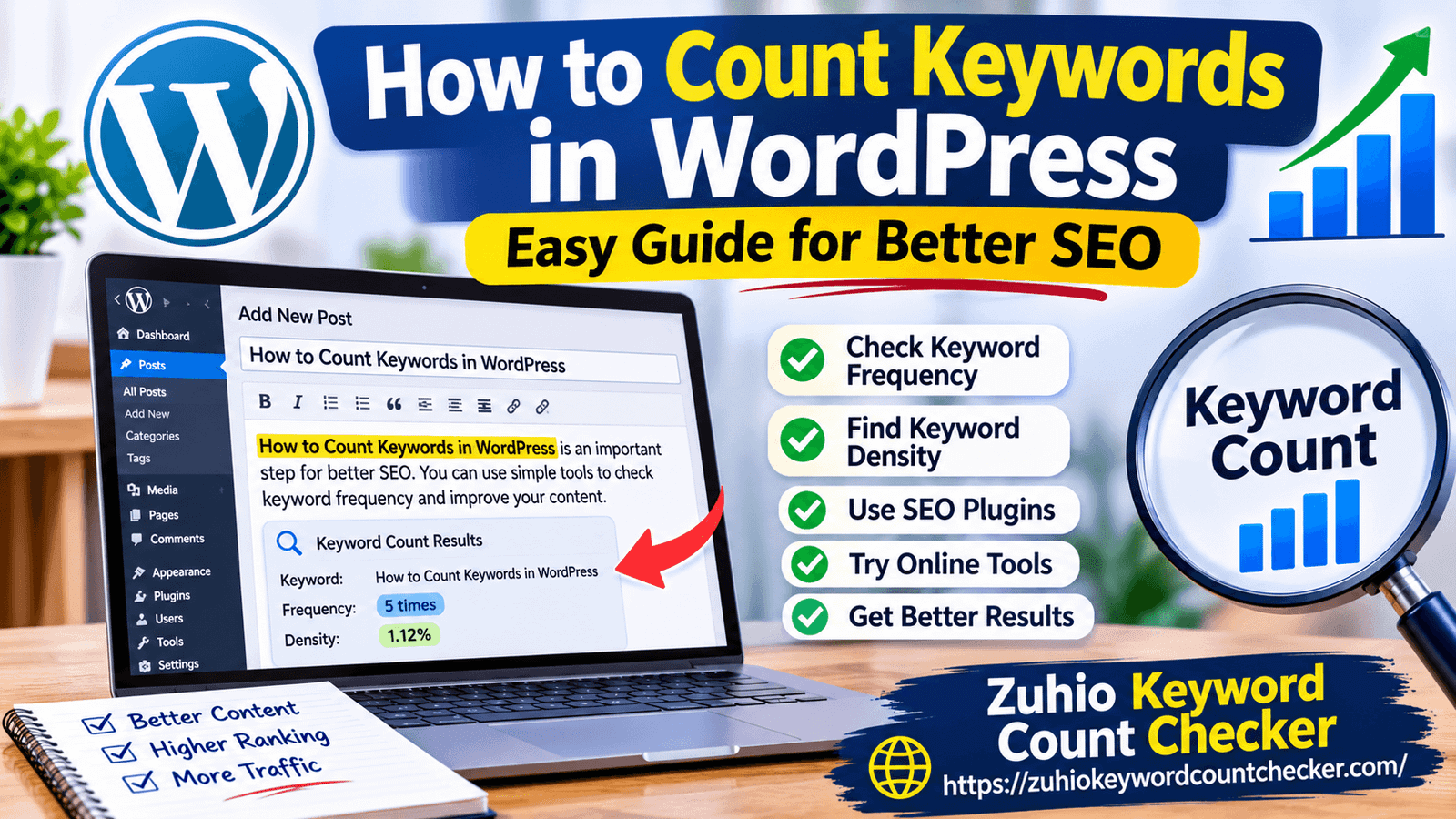
An online keyword count checker is one of the easiest tools for analyzing website content. First, open your WordPress dashboard and select the article you want to check. Copy the main article text and paste it into an online keyword counting tool. Depending on the available features, the tool may display word counts, keyword frequency, and other text statistics. When researching How to Count Keywords in WordPress, this method is especially useful because you do not need to install additional software. You can also use the Zuhio Keyword Count Checker to review keyword usage and make your content editing process more convenient.
5. Count Keywords Using the Browser Find Feature
Your internet browser provides another simple way to find a particular keyword. Open your published WordPress article and press Ctrl + F on Windows or Command + F on Mac. Type the keyword you want to check, and your browser will highlight matching appearances on the page. This method is useful for quick searches, especially when you want to check a short article. However, it may also count words from navigation menus, footers, and related posts. For more accurate results when learning How to Count Keywords in WordPress, copy only the main article content into a keyword counter.
6. Use WordPress SEO Plugins
SEO plugins can make content optimization easier for beginners and experienced website owners. Popular options include Yoast SEO and Rank Math. Depending on the version and settings, these plugins provide suggestions about focus keywords, headings, page titles, meta descriptions, and other on-page SEO elements. They work inside the WordPress dashboard, so you can review your article while editing it. Anyone researching How to Count Keywords in WordPress can benefit from understanding these plugins. However, their scores are recommendations rather than guarantees of better search engine rankings.
7. What Is a Focus Keyword?
A focus keyword is the main search phrase that describes the subject of your article. For example, an article about keyword counting in WordPress can target the phrase How to Count Keywords in WordPress. This phrase should match the information that your page provides. You can include it naturally in your title, introduction, and relevant headings. When learning How to Count Keywords in WordPress, focus on choosing a phrase that matches your audience’s search intent. Avoid selecting unrelated keywords simply because they appear popular in keyword research tools.
8. How to Check Keyword Frequency
Keyword frequency means the total number of times a particular word or phrase appears in a document. For example, if the phrase “WordPress SEO” appears 12 times in an article, its frequency is 12. A keyword frequency checker can display this information without requiring manual searching. Understanding How to Count Keywords in WordPress makes it easier to identify repeated phrases and review your content. You can use this information to improve sentence variety and make your article sound more natural.
9. What Is Keyword Density?
Keyword density measures how frequently a keyword appears compared with the total number of words in an article. The calculation is simple: divide the number of keyword appearances by the total word count and multiply the result by 100. For example, if a 1,000-word article contains a keyword 10 times, its density is 1%. When exploring How to Count Keywords in WordPress, understanding density can help you review keyword usage in relation to article length. There is no fixed density percentage that guarantees higher Google rankings.
10. Difference Between Keyword Count and Keyword Density
Keyword count and keyword density are two related measurements, but they provide different information. Keyword count shows the exact number of times a word or phrase appears, while keyword density calculates its percentage compared with the total article length. For example, two articles might contain the same keyword 10 times, but their density will differ if one article contains 500 words and the other contains 2,000 words. Learning How to Count Keywords in WordPress helps you understand these measurements and use them during content editing.
11. How to Choose the Right Keywords
Choosing suitable keywords is an important part of creating successful website content. Start by understanding what your audience wants to learn and which questions they commonly search for. Use keyword research tools to discover related phrases and compare their search intent. Select one main focus keyword and several supporting terms that match your article. If you understand How to Count Keywords in WordPress, you can also review whether your selected terms appear naturally in your writing. Relevant keywords help you create focused articles instead of filling pages with unrelated phrases.
12. Where Should You Place Keywords?
Keyword placement helps readers and search engines understand the subject of a webpage. You can naturally include your main keyword in the page title, introduction, URL slug, and suitable headings. Related keywords can also appear in the main paragraphs where they support the discussion. However, repeating the same phrase in every heading is unnecessary. Learning How to Count Keywords in WordPress allows you to review keyword placement and identify excessive repetition. Always make sure your sentences sound natural and provide useful information.
13. How to Avoid Keyword Stuffing
Keyword stuffing happens when a writer repeats the same keyword excessively to manipulate search engine rankings. It can make an article difficult to read and reduce the quality of the visitor experience. For example, repeating How to Count Keywords in WordPress in every sentence does not make an article more helpful. Instead, use related phrases, synonyms, and clear explanations where appropriate. Review your article after writing and remove repetitions that do not add meaning. Good SEO content should be written for people first.
14. Benefits of an Online Keyword Frequency Tool
An online keyword frequency tool can save time when reviewing long articles. It helps writers identify repeated phrases, check word frequency, and understand how terms are distributed throughout their content. Bloggers, students, digital marketers, and website owners can all benefit from these tools. When researching How to Count Keywords in WordPress, an online counter provides a convenient way to analyze content without installing a plugin. It is especially useful for websites that publish articles regularly.
15. How to Count Multiple Keywords at Once
Some articles discuss several related subjects and require more than one keyword to be checked. For example, an SEO article might include keyword density checker, keyword counter, WordPress SEO, and content optimization. Some keyword analysis tools allow users to review multiple terms in the same document. This makes How to Count Keywords in WordPress easier when managing a large website. Checking multiple phrases can also help you identify repeated wording and understand whether your article covers its supporting topics.
16. Common Keyword Counting Mistakes
One common mistake is counting the entire webpage instead of the actual article content. Navigation menus, footers, advertisements, and related posts may affect browser-based results. Another mistake is believing that a higher keyword count automatically improves rankings. Some writers also forget to check related phrases and focus only on exact-match keywords. Understanding How to Count Keywords in WordPress correctly can help you avoid these problems. Always analyze the right text and review your results carefully before making changes.
17. How Article Length Affects Keyword Density
Article length directly affects keyword density because the calculation uses the total number of words. If a keyword appears 10 times in a 500-word article, its density is 2%. If the same keyword appears 10 times in a 2,000-word article, the density becomes 0.5%. The frequency remains unchanged, but the percentage is different. Anyone learning How to Count Keywords in WordPress should understand this relationship. Never add unnecessary paragraphs simply to change the keyword density percentage.
18. Best Practices for WordPress SEO
Good WordPress SEO begins with helpful and original information. Use descriptive titles, meaningful headings, relevant internal links, and clear paragraphs. Make sure your website works properly on mobile devices and that visitors can access important pages easily. Check grammar and spelling before publishing and update older articles when information changes. Understanding How to Count Keywords in WordPress can support your content review process, but it should be combined with research, good website structure, and a positive visitor experience.
19. Why Bloggers Need Keyword Analysis Tools
Bloggers regularly publish articles about different subjects and need simple ways to review their writing. Keyword analysis tools help them understand repeated terms, word frequency, and other text statistics. These tools can make editing faster and help maintain consistency across different articles. When bloggers understand How to Count Keywords in WordPress, they can include keyword checking in their normal publishing routine. A simple content review can help identify obvious problems before an article goes live.
20. How Zuhio Keyword Count Checker Can Help
Zuhio Keyword Count Checker can support your content editing workflow by helping you analyze words and phrases in your articles. Instead of manually searching through long documents, you can use an online tool to review keyword usage more conveniently. This is useful for bloggers who want to check repeated terms before publishing. If you are learning How to Count Keywords in WordPress, try including a keyword counter in your final editing process. Visit Zuhio Keyword Count Checker to explore its available features and review your text.
21. Tips for Better Keyword Optimization
Before publishing a WordPress article, read the complete content and check whether it answers the main search question. Review your title, introduction, headings, internal links, and keyword placement. Remove repeated phrases that do not add meaning and use related terms naturally. You should also make sure the article provides enough useful information for readers. Learning How to Count Keywords in WordPress is only one part of a wider SEO strategy. Combine keyword analysis with research, original writing, and regular content improvements.
22. How to Improve Your Content Before Publishing
Content editing should always be the final step before publishing a new article. Read each paragraph carefully and make sure the information is clear, correct, and relevant. Check your headings, links, spelling, grammar, and images. You can use How to Count Keywords in WordPress as part of your editing checklist to identify unnecessary repetition. Also check that your article is easy to read on mobile devices. A well-organized page gives visitors a better experience and makes important information easier to find.
23. Conclusion
Learning How to Count Keywords in WordPress can help bloggers and website owners understand their content more clearly. Online keyword counters, browser search features, and SEO plugins provide simple ways to review keyword frequency and improve articles. However, successful SEO is not about repeating a phrase as many times as possible. Focus on natural keyword placement, useful information, clear headings, and a positive reading experience. By making keyword analysis part of your editing routine, you can create more organized and helpful WordPress content for your visitors.
Frequently Asked Questions (FAQs)
1. How to Count Keywords in WordPress without a plugin?
Copy your article into a free online keyword counter and search for your focus keyword. You can also use the browser Find feature for a quick check.
2. Does WordPress have a built-in keyword counter?
The standard WordPress editor does not provide a complete keyword frequency counter. You can use external tools or suitable SEO plugins.
3. How many times should I use a focus keyword?
There is no fixed number that guarantees rankings. Use your focus keyword naturally wherever it helps explain the topic.
4. Can I count keywords in multiple WordPress posts?
Yes. You can copy each article into an online keyword counter and review the results separately.
5. Is keyword density important for Google?
Keyword density can help you review content, but Google does not require a specific keyword density percentage.
6. Which is the easiest keyword counting tool?
An online keyword count checker is convenient because you can analyze text without installing a WordPress plugin.
Short Paragraph
How to Count Keywords in WordPress is an important topic for bloggers and website owners who want to improve their content. With free online keyword counters, browser search features, and SEO plugins, you can check keyword frequency, review repeated phrases, and improve your articles. Use keywords naturally and focus on creating helpful information for readers.