Introduction
One of the most common questions in search engine optimization is how many keywords per page should be used to achieve better Google rankings. Many website owners believe that adding more keywords will automatically improve their search visibility, but this is not always true. Good SEO is about using the right keywords in the right places while providing helpful and original information. Every webpage should have a clear topic and focus on answering the questions visitors are searching for. Using too many unrelated keywords can make your content confusing, while using relevant primary and secondary keywords naturally can improve its structure and usefulness. In this complete guide, you will learn how many keywords per page are suitable, how to select the best keywords, and how to create content that is easy for both readers and search engines to understand.
1. How Many Keywords Per Page Should You Use?
There is no fixed number of keywords that every webpage must contain. In most cases, it is best to focus on one primary keyword and several closely related secondary keywords. The exact number depends on the topic, search intent, article length, and amount of useful information you want to provide. For example, if your article is about cloud audio streaming, your main keyword could be “cloud audio streaming,” while related phrases might include online music streaming, cloud audio systems, and wireless audio technology. These terms support the main subject without making the article repetitive. Instead of trying to reach a specific keyword count, concentrate on covering the topic naturally and completely.
2. What Is a Primary Keyword?
A primary keyword is the main search phrase you want a particular webpage to be relevant for. It represents the central topic of your content and helps you plan the title, introduction, headings, and important sections. For example, if your article explains how many keywords per page are appropriate, that phrase can be your primary keyword. You should understand what people expect when searching for it and create content that answers their questions. Choosing one clear primary keyword makes your content strategy easier to manage because it gives the page a specific purpose instead of trying to target several unrelated topics at once.
3. What Are Secondary Keywords?
Secondary keywords are related search terms that support your main keyword and help explain the topic in greater detail. They may include synonyms, variations, and phrases that people use when looking for similar information. For an article about keyword usage, relevant secondary keywords could include keyword placement, SEO keyword strategy, keyword density, on-page SEO, and keyword research. These phrases allow you to cover different aspects of a subject without repeating the same words in every paragraph. When used naturally, secondary keywords make your content more informative and help readers find answers to related questions within one useful webpage.
4. Why Is Keyword Selection Important for SEO?
Keyword selection is an important part of planning successful website content because it connects your articles with the questions people search for online. If you choose keywords that are unrelated to your topic or audience, your page may attract visitors who are not interested in your information. Before writing, research the search terms people use and understand what they want to find. Consider whether they are looking for information, product comparisons, instructions, or a particular service. When your content matches search intent, it becomes more relevant to visitors and provides a stronger foundation for your SEO strategy.
5. One Primary Keyword Per Page
Using one main keyword for each webpage is a simple way to maintain a clear content structure. It gives your article a central subject and helps prevent different topics from competing for attention on the same page. For example, an article targeting “how many keywords per page” should mainly explain keyword selection, keyword placement, and related SEO practices. You can still include several supporting phrases, but they should all connect to the same subject. This approach also makes it easier to create page titles, descriptions, and headings that accurately represent the information visitors will find.
6. How Many Secondary Keywords Should You Use?
There is no official limit on the number of secondary keywords you can use. A short informational page may need only a few related phrases, while a detailed guide may naturally cover many variations. The important point is that every keyword should support the main topic. Avoid adding unrelated phrases simply because they have high search volume. Instead, look for terms that help explain the subject, answer additional questions, or provide useful examples. When you write naturally and cover a topic thoroughly, relevant secondary keywords often appear without needing to force them into your sentences.
7. How to Find the Best Keywords for a Page
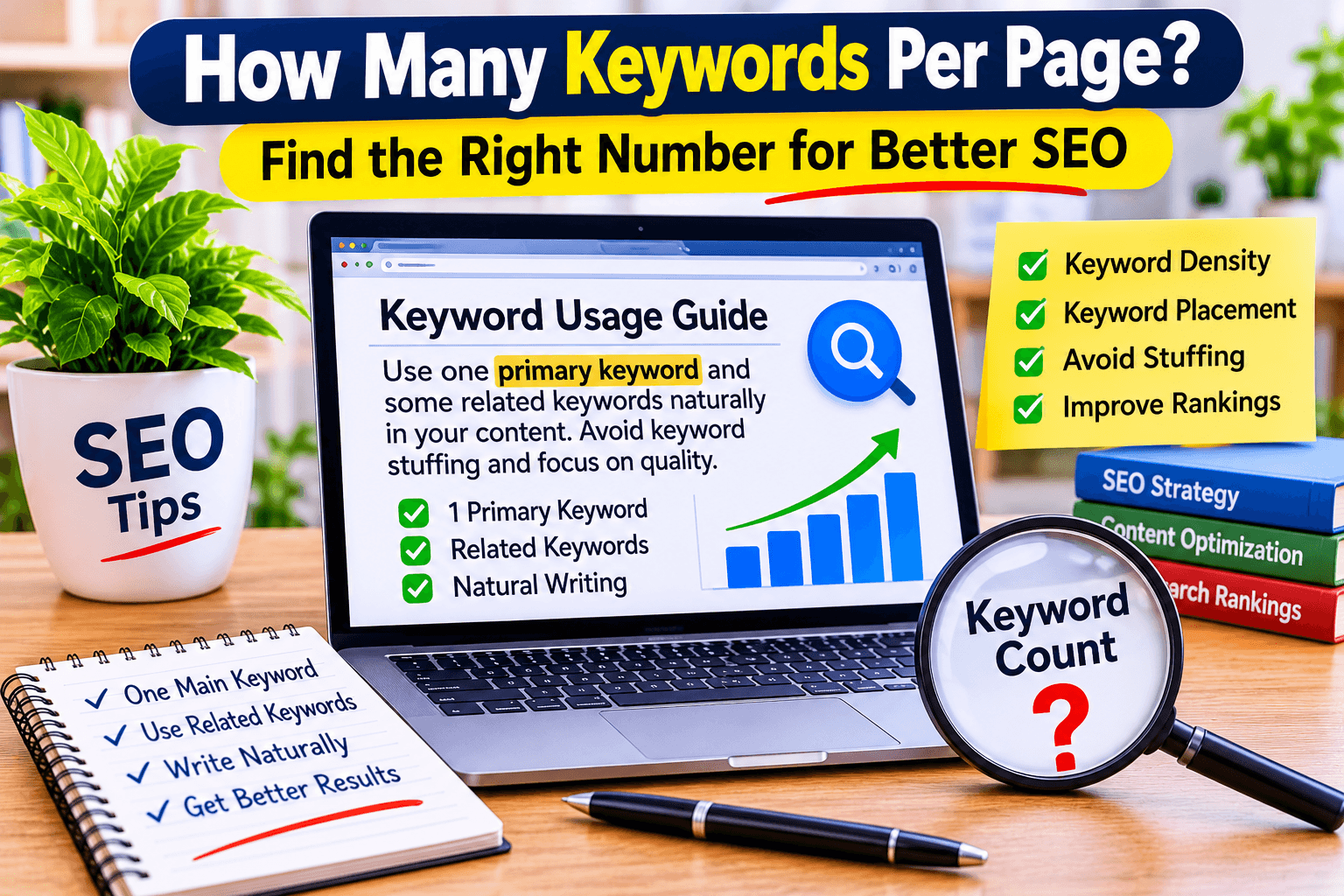
Start your keyword research by identifying the main subject of your webpage. Think about the words your target audience would use when searching for information about that subject. You can then use keyword research tools to discover related phrases, search demand, and competing pages. Google Search Console can also provide useful information about the search queries for which your existing pages receive impressions. Compare the keywords you discover and select those that match your content and audience. The best keyword is not always the one with the highest search volume. Relevance and search intent should remain important parts of your decision.
8. Understand Search Intent Before Choosing Keywords
Search intent means the reason behind a person’s search. Some people want to learn something, while others want to compare products, find a website, or make a purchase. Understanding this difference helps you create the right type of content. For example, someone searching “how many keywords per page” probably wants a practical SEO explanation rather than a product sales page. Your article should therefore provide clear answers, examples, and useful recommendations. When your content matches what visitors expect, it becomes more helpful and gives them a reason to stay and explore related information.
9. Place Your Primary Keyword in the SEO Title
Your SEO title should clearly explain what the page is about. Including your primary keyword naturally in the title can help readers understand the topic before opening the webpage. For example, “How Many Keywords Per Page? A Complete SEO Guide” is direct and informative. Try to make your title interesting without repeating the keyword unnecessarily. A good title should accurately represent your content and avoid promises that the article cannot fulfill. Keep the wording simple so that visitors can quickly understand the value of your page.
10. Use Keywords Naturally in the Introduction
The introduction is a useful place to introduce your main keyword because it establishes the subject of your article. Explain the topic, identify the problem readers may have, and describe what they will learn. You do not need to repeat the keyword several times in the opening paragraph. One natural mention is enough to introduce the subject clearly. After that, focus on providing helpful information and creating a smooth transition into the main sections. A good introduction should make readers interested in continuing rather than making them feel that they are reading a list of search phrases.
11. Add Relevant Keywords to Your Headings
Headings help organize your article and make long content easier to navigate. You can include your primary or secondary keywords in headings when they accurately describe the information in that section. For example, headings such as “What Are Secondary Keywords?” and “How to Find the Best Keywords for a Page” provide clear information about the topics below them. Do not use the same keyword in every heading simply to increase its frequency. Instead, create a logical structure that helps visitors find specific answers quickly and understand how each section connects to the main subject.
12. Understand Keyword Density
Keyword density refers to how frequently a particular keyword appears compared with the total number of words in your content. Some writers use keyword density tools to review their articles, but there is no universal percentage that guarantees better Google rankings. A page should not be written to reach an artificial keyword density target. If a phrase appears naturally because it is necessary to explain the subject, there is no need to remove it just to lower a percentage. The main goal is to create useful content that reads smoothly and covers the topic properly.
13. Avoid Keyword Stuffing
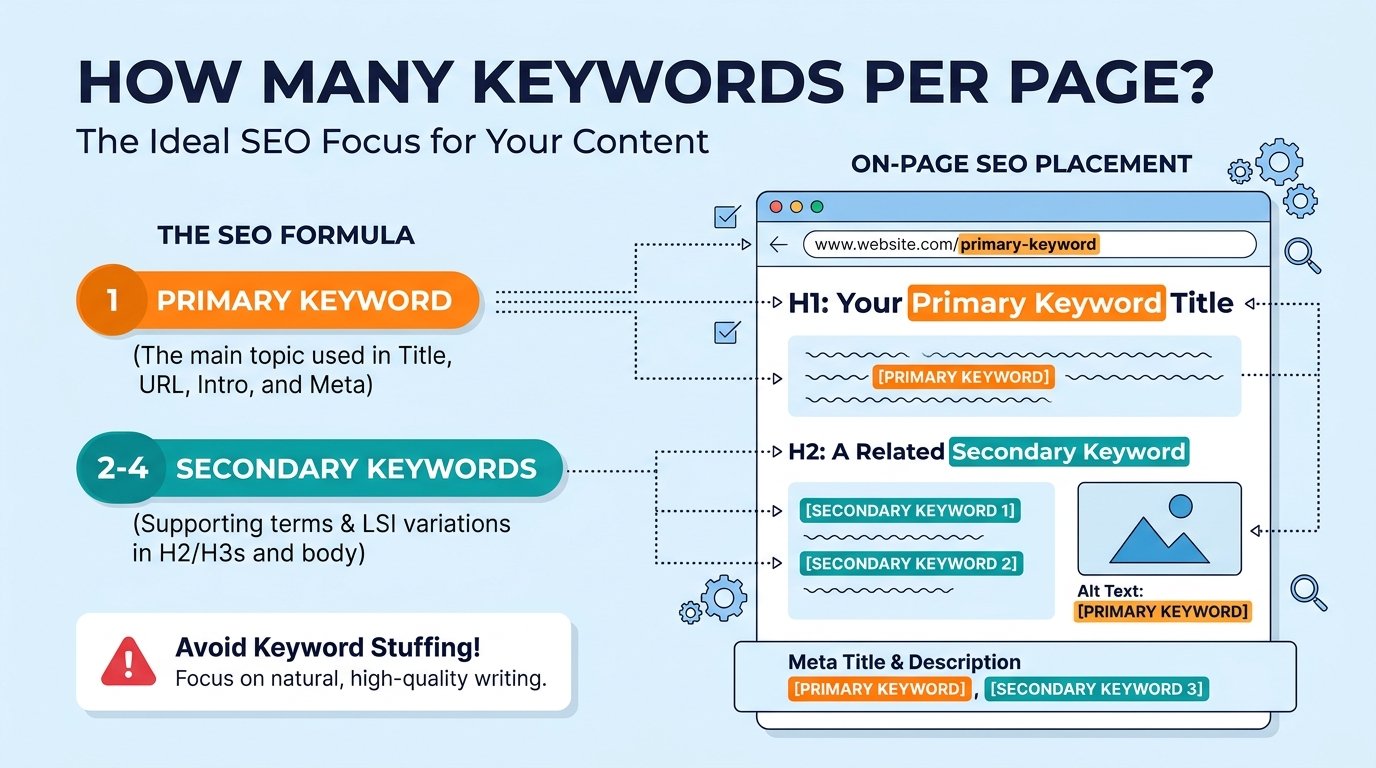
Keyword stuffing occurs when a writer repeats keywords excessively in an attempt to influence search rankings. It can make sentences awkward, paragraphs repetitive, and articles difficult to understand. For example, repeating “how many keywords per page” in every sentence does not make your article more useful. Search engines have become better at understanding topics and language, so unnatural repetition is not a good optimization strategy. Use your focus keyword where it makes sense, include relevant variations, and remove unnecessary repetitions. Always read your content from a visitor’s perspective before publishing it.
14. Use Long-Tail Keywords
Long-tail keywords are more specific search phrases that usually contain several words. They can help you target visitors looking for particular information. For example, “how many keywords should a blog post have” is a more specific phrase than simply “SEO keywords.” Long-tail keywords can be useful because they often reveal exactly what the searcher wants to learn. You can include them in relevant headings, examples, and FAQs when they fit your article. However, do not create unnecessary sections for every small variation. Each section should provide useful information and contribute to the main topic.
15. Use Internal Links to Support Your Keywords
Internal links connect different pages on your website and help visitors discover related information. For example, an article about keyword selection could link to your guides about keyword density, keyword research, keyword placement, and on-page SEO. Use descriptive anchor text so that readers understand what they will find after clicking. Internal links also help search engines discover pages and understand how your website content is connected. Avoid adding links simply for the sake of adding them. Choose pages that genuinely provide additional information and improve the visitor’s experience.
16. Optimize Your Images and Alt Text
Images make articles more interesting and can help explain complex information. When adding images, use relevant file names and write descriptive alt text that explains what each image shows. If an image illustrates keyword research, its alt text should describe that subject clearly. You can include a keyword naturally when it accurately describes the image, but avoid repeating the same phrase in every image description. Good image optimization focuses on accessibility, clarity, and relevance rather than adding extra keywords without purpose.
17. Should Every Page Target Different Keywords?
Ideally, every important webpage should have a distinct main purpose and target a specific search intent. If several pages on your website target exactly the same topic in the same way, they may compete with one another in search results. This situation is often called keyword cannibalization. To avoid unnecessary overlap, plan your website content carefully and give each article a clear focus. Related pages can cover different parts of a larger subject and link to one another. For example, one article can explain keyword density, while another focuses on how to choose keywords for a webpage.
18. How to Measure Keyword Performance
After publishing your article, monitor its performance using tools such as Google Search Console and analytics software. Search Console can show which queries generate impressions and clicks, helping you understand how people discover your content. Review whether the page is indexed and whether it receives relevant search traffic. If visitors are searching for related questions that your article does not answer, consider improving the content with useful information. Avoid changing keywords every few days because SEO performance can take time to develop. Make changes based on meaningful information rather than guessing.
19. Common Keyword Optimization Mistakes
One common mistake is trying to target too many unrelated keywords on one page. Another is choosing keywords only because they have high search volume without considering whether they match the article. Some writers also repeat the primary keyword too often or create headings that do not provide meaningful information. Ignoring search intent, publishing thin content, and forgetting internal links can also weaken an SEO strategy. To avoid these problems, plan your page before writing, choose relevant keywords, and review the finished article carefully. Quality and usefulness should always come before keyword counts.
20. Best SEO Practices for Keyword Usage
A balanced keyword strategy starts with one clear primary topic. Research relevant secondary keywords, understand search intent, and organize your content with meaningful headings. Include your main phrase naturally in important locations, such as the title and introduction, while using related terms throughout the article where they make sense. Write original explanations, add helpful examples, and connect relevant pages through internal links. Finally, review your content for unnecessary repetition and monitor its performance after publication. These practices help you build a useful webpage without depending on keyword stuffing or artificial density targets.
Conclusion
Understanding how many keywords per page to use can help you create a more focused and effective SEO strategy. There is no fixed keyword limit for every webpage, but using one primary keyword with relevant secondary phrases is a practical starting point. Focus on search intent, natural keyword placement, useful headings, and original information. Avoid keyword stuffing and do not write simply to achieve a particular density percentage. When you create content that answers visitors’ questions and provides genuine value, you build a stronger foundation for long-term search visibility.
Frequently Asked Questions (FAQs)
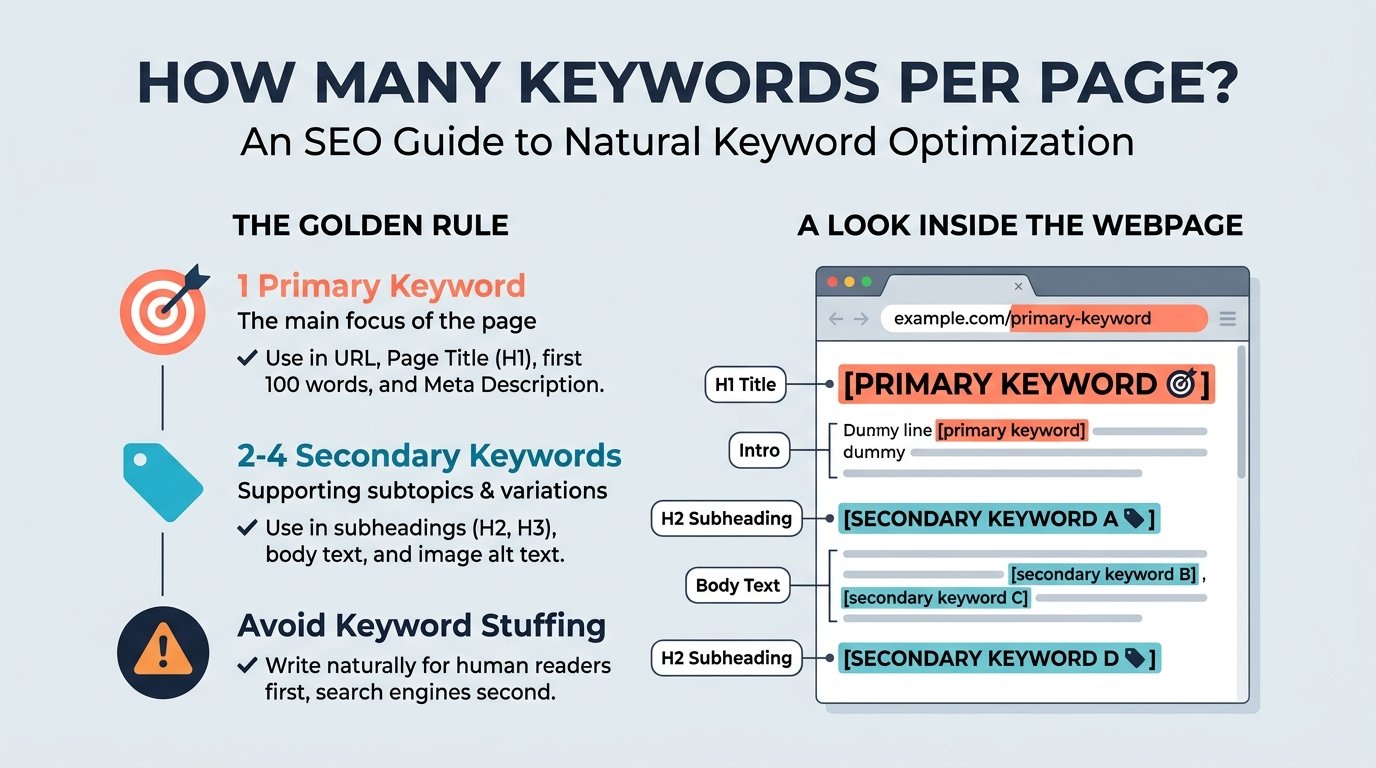
1. How many keywords should I use on one page?
Start with one primary keyword and use relevant secondary keywords naturally. The exact number depends on the subject and length of your content.
2. Can I target multiple keywords on one page?
Yes. You can target several closely related keywords as long as they support the same topic and search intent.
3. Is one keyword enough for SEO?
One primary keyword can provide a clear focus, but related terms can help you cover the topic more completely.
4. Does Google recommend a specific keyword density?
No. Google does not require a specific keyword density percentage for webpages.
5. Should I use my focus keyword in every heading?
No. Use it only when it naturally describes the section. Relevant and informative headings are more important than repetition.
6. Can too many keywords hurt SEO?
Using too many unrelated or unnaturally repeated keywords can reduce content quality and may lead to keyword stuffing.
7. How do I choose the right primary keyword?
Choose a phrase that closely matches your page topic, audience, and search intent. Use keyword research to understand its relevance and competition.