Introduction
Understanding branded vs non-branded keywords is important for building a successful SEO strategy. Keywords help people discover websites, products, services, and businesses through search engines. However, not every search has the same purpose. Some people search for a specific company or product name, while others search for general information without knowing which brand they want. These two types of searches are known as branded and non-branded keywords. Both can bring valuable visitors to your website, but they work in different ways. Branded keywords help people find businesses they already recognize, while non-branded keywords help attract new audiences who are discovering a topic or product for the first time. In this guide, you will learn how these keywords work, why they matter, and how to use them together to improve your SEO performance.
1. What Are Branded Keywords?
Branded keywords are search phrases that contain the name of a company, business, product, or recognizable brand. People usually use these keywords when they already know something about a particular business and want to find more information about it. For example, searches such as “Nike running shoes,” “Apple iPhone,” and “Samsung Galaxy” contain brand names. These searches often show that users have some level of awareness or interest in a particular company. Businesses can use branded keyword research to understand what people are searching for and create relevant pages that help visitors find product information, reviews, customer support, and other important details.
2. What Are Non-Branded Keywords?
Non-branded keywords are search phrases that do not contain a specific company or product brand name. People use these terms when looking for general information, solutions, products, or services. For example, “best running shoes,” “wireless headphones,” and “cloud audio streaming system” are non-branded keywords. These searches are important because they allow businesses to reach people who may not know their brand yet. By creating helpful articles, product guides, and educational pages around relevant non-branded keywords, website owners can attract new visitors and introduce their products or services to a wider audience.
3. Branded vs Non-Branded Keywords: Main Differences
The main difference between branded and non-branded keywords is whether a search phrase includes a recognizable brand name. Branded searches usually show that someone is looking for a particular business, product, or company. Non-branded searches usually indicate that someone is researching a general topic or exploring available options. For example, “Nike shoes” is branded, while “best sports shoes” is non-branded. Both keyword types are useful, but they support different stages of the customer journey. Branded keywords help businesses connect with people who already recognize them, while non-branded keywords create opportunities to reach potential customers who are still exploring their choices.
4. Why Are Branded Keywords Important for SEO?
Branded keywords are important because they help businesses appear when people search for their names, products, or services. A strong presence for branded searches makes it easier for interested visitors to find official websites instead of unrelated pages. Businesses can create dedicated product pages, company information pages, and customer support resources to target these searches. Monitoring branded keywords can also provide insight into brand awareness and public interest. When people frequently search for a company by name, it may indicate growing recognition. However, branded traffic should be considered alongside other SEO measurements to understand the complete performance of a website.
5. Why Are Non-Branded Keywords Important for SEO?
Non-branded keywords are valuable because they help businesses reach audiences beyond their existing customers. Someone searching for “best podcast microphone for beginners” may not know which brand offers the right product. A helpful article comparing different microphones can introduce that visitor to your website and provide useful information. Non-branded searches also give smaller businesses opportunities to compete by answering specific questions and creating high-quality content. By targeting relevant general search phrases, you can attract people who are researching a subject, comparing options, or looking for a solution to a problem.
6. Examples of Branded Keywords
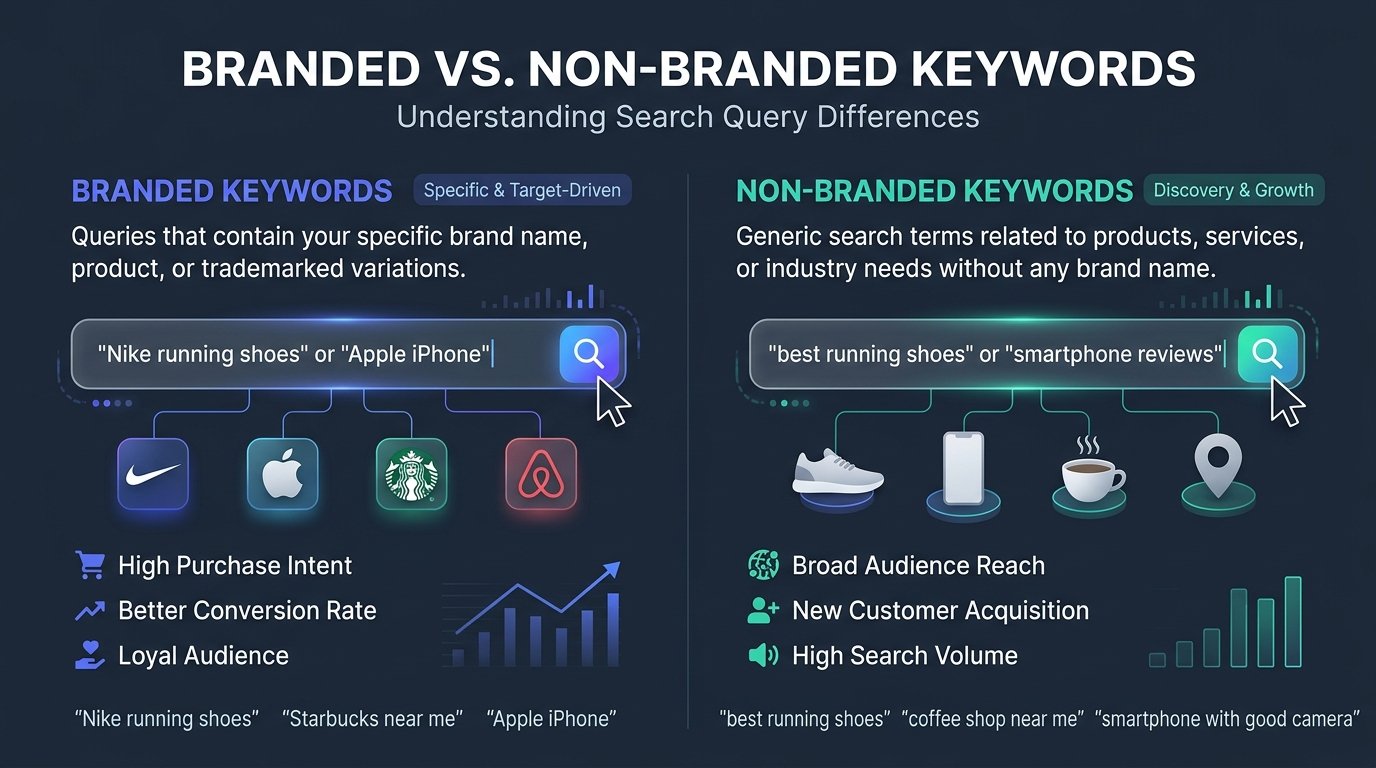
Branded keywords can include company names, product names, brand-related questions, and specific service searches. Some examples include:
- Apple iPhone 17 review
- Nike running shoes
- Samsung Galaxy price
- Spotify Premium plans
- Bose wireless speakers
- Microsoft Office download
These searches clearly identify a particular company or product. Businesses should make sure their official pages provide accurate information and answer the questions users may have. Relevant product details, pricing information, support resources, and helpful descriptions can make branded landing pages more useful for visitors.
7. Examples of Non-Branded Keywords
Non-branded keywords focus on general topics, products, and services rather than specific businesses. Examples include:
- Best wireless headphones
- Affordable running shoes
- How to improve audio quality
- Best podcast microphone
- Cloud music streaming
- Wireless speaker setup guide
These keywords can help businesses attract people who are still discovering different solutions. Articles, tutorials, comparison pages, and buying guides are useful content formats for targeting these searches. The key is to understand what users want and provide information that genuinely helps them.
8. Which Keywords Bring More Website Traffic?
Both branded and non-branded keywords can bring valuable website traffic, but their performance depends on the business, industry, and audience. Branded keywords may attract visitors who already know a company and want specific information. Non-branded keywords can reach a wider group of people who are searching for general solutions. A popular brand may receive substantial traffic from its name, while a new website may depend more on non-branded searches to attract its first visitors. Instead of choosing only one type, businesses should measure both and understand how each contributes to their website goals.
9. Branded Keywords and Customer Trust
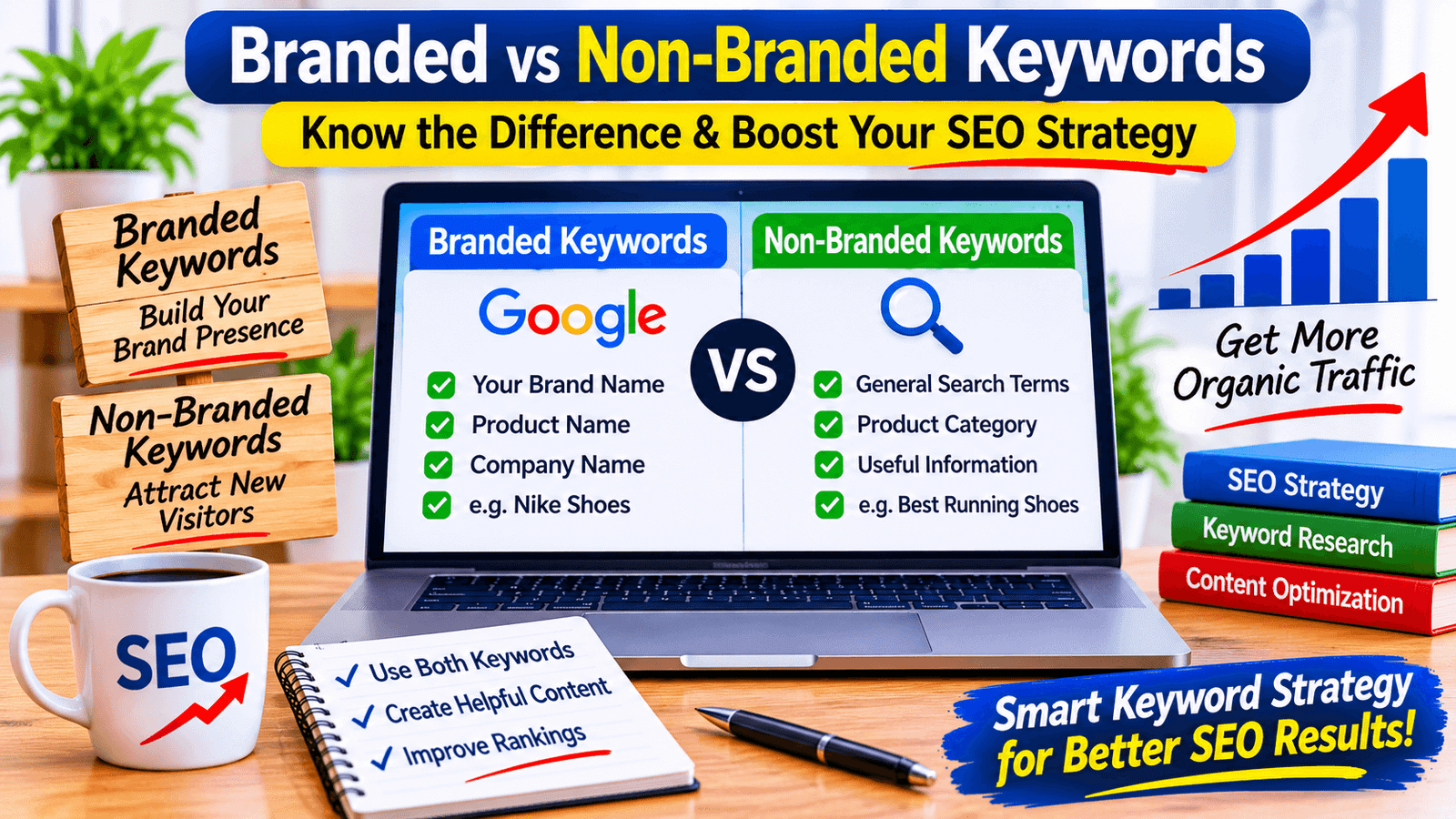
Branded searches often indicate that a person already recognizes a business or has heard about its products. This familiarity can make branded visitors more interested in exploring a company’s website. For example, someone searching for a specific headphone brand may want to check its latest products, specifications, or customer reviews. Businesses should use these opportunities to provide accurate information, clear navigation, and useful product pages. Trust is not created through keyword placement alone. It comes from delivering a reliable experience and giving visitors the information they need to make confident decisions.
10. Non-Branded Keywords for Finding New Customers
Non-branded keywords are especially useful for reaching people who have not discovered your business yet. These users may be looking for information, comparing different products, or trying to solve a problem. Creating helpful content around their questions gives your website an opportunity to appear during their research. For example, a website about audio technology could publish guides about wireless speakers, cloud audio systems, and improving sound quality. These articles can introduce new visitors to the website and encourage them to explore related content. Over time, this approach can help build awareness and attract relevant organic traffic.
11. How to Find Branded Keywords
To find branded keywords, start by identifying your business name, product names, service names, and common brand variations. Use keyword research tools to discover related searches and questions. Google Search Console can help you identify queries that already bring visitors to your website. You can also review customer questions, product reviews, and support searches to understand what people want to know about your brand. Organize these phrases into groups based on their purpose, such as product information, company details, pricing, reviews, and customer support. This makes it easier to create relevant pages and improve your branded search presence.
12. How to Find Non-Branded Keywords
Finding non-branded keywords begins with understanding your audience and the problems they want to solve. Think about the questions people might ask before choosing a product or service. You can use keyword research tools, search suggestions, related searches, and competitor content to discover relevant topics. For example, if your website covers audio technology, you might research phrases such as “best WiFi speakers,” “how to connect speakers to WiFi,” and “wireless multi-room audio system.” Choose terms that match your website’s subject and provide opportunities to create useful content rather than selecting keywords only because they have high search volume.
13. Use Branded Keywords in Website Content
Branded keywords should appear naturally on pages that provide information about your business or products. You can include your company name in the homepage title, About page, product descriptions, and relevant support articles. Make sure that your brand information is accurate and consistent across the website. Avoid repeating your business name in every sentence because this can make your writing sound unnatural. Instead, focus on explaining your products, services, and business values clearly. The goal is to help visitors find reliable information when they search for your brand.
14. Use Non-Branded Keywords in Blog Articles
Blog articles are an effective way to target non-branded keywords because they allow you to answer questions and explain general topics. For example, a website about audio technology can publish articles about speaker setup, audio streaming, wireless connectivity, and sound quality. Each article should have a clear main topic and provide original information. Use relevant secondary keywords naturally in headings and paragraphs. Avoid creating several pages that answer exactly the same question without offering different value. A well-planned blog strategy can help your website cover important topics and attract visitors from different search queries.
15. Branded vs Non-Branded Keywords for Small Businesses
Small businesses can benefit from using both types of keywords. Branded keywords help customers find the business when they search for its name, while non-branded keywords introduce the business to people who are looking for relevant products or services. A new business may initially receive more opportunities from non-branded searches because fewer people know its name. As brand awareness grows, branded searches may become more important. Small businesses should create useful service pages, informative blog posts, and accurate business information to support both strategies. This balanced approach helps build visibility among existing and potential customers.
16. How to Measure Branded and Non-Branded Traffic
Measuring branded and non-branded traffic helps you understand how people discover your website. Google Search Console provides search query information, impressions, clicks, and average positions. You can use this information to identify searches containing your business or product names and compare them with general search terms. Analytics tools can provide additional information about visitor behavior after people arrive on your website. Create separate keyword groups when reviewing performance so that you can understand which type of search brings visitors and supports your business goals. Regular measurement helps you make better content and SEO decisions.
17. Common Mistakes in Branded Keyword SEO
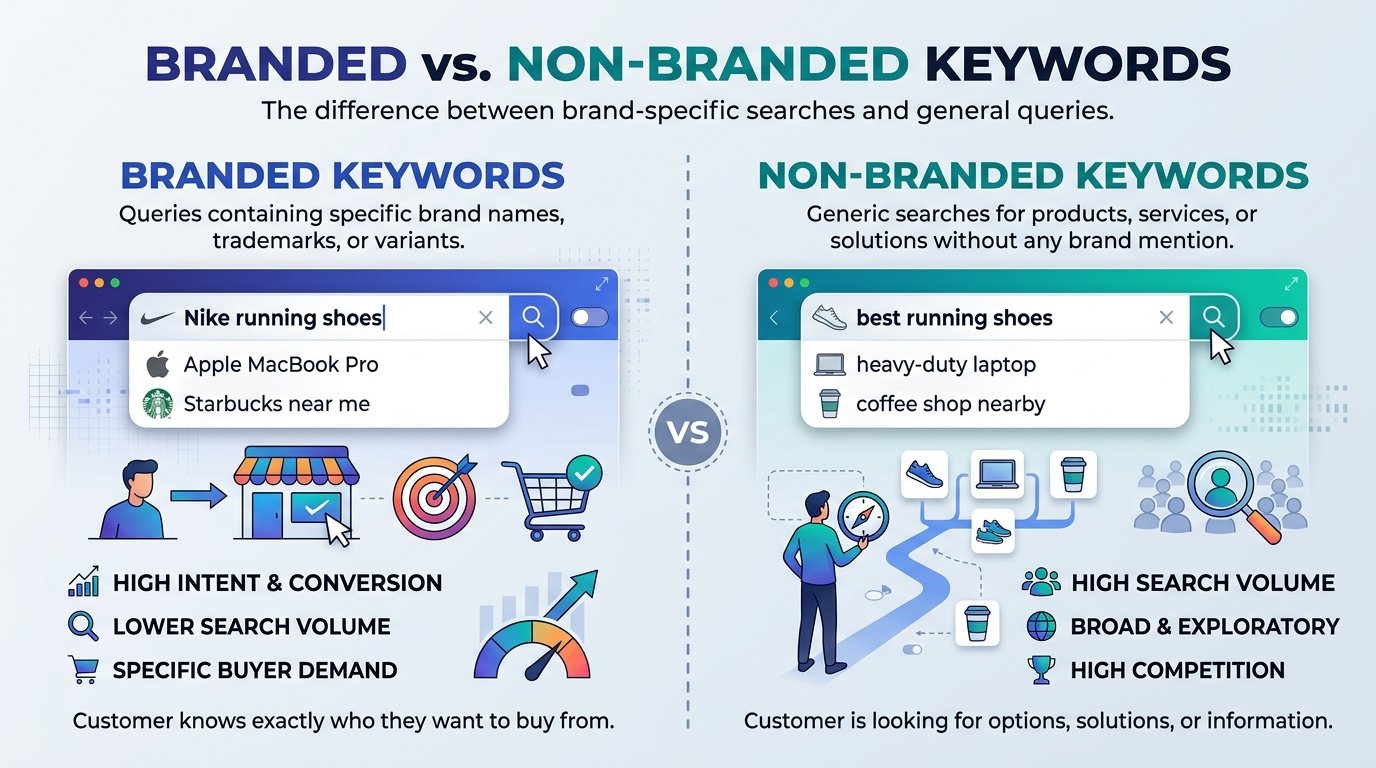
One common mistake is assuming that branded keywords alone are enough to grow a website. Although brand searches can bring interested visitors, they may not reach people who have never heard about the business. Another mistake is creating weak product pages that fail to answer customer questions. Some businesses also use inconsistent company names or forget to optimize important pages for branded searches. To avoid these problems, maintain accurate brand information, create useful landing pages, and support branded SEO with a strong non-branded content strategy. Every page should provide a clear benefit to visitors.
18. Common Mistakes in Non-Branded Keyword SEO
A frequent mistake in non-branded SEO is targeting broad keywords without considering competition or search intent. A new website may struggle to compete for a very general phrase when established websites already provide extensive information. Another problem is publishing articles that contain keywords but do not answer the questions users are asking. Some website owners also create too many similar articles, causing content overlap. A better strategy is to select relevant topics, understand what searchers want, and create detailed content that offers useful information. Specific long-tail keywords can also provide good opportunities for smaller websites.
19. Best SEO Strategy: Use Both Keyword Types
The strongest approach is usually to combine branded and non-branded keywords rather than relying on only one. Use branded keywords to improve the visibility of your business name, products, and services. Use non-branded keywords to attract people who are searching for general information and have not yet chosen a brand. For example, a speaker company can create product pages targeting its speaker models and blog articles targeting searches such as “best wireless speakers for home.” Link relevant educational articles to suitable product pages so visitors can move naturally from learning about a topic to exploring available solutions.
20. Future of Branded vs Non-Branded Keywords
Search behavior continues to change as people use search engines, voice assistants, and AI-powered tools to find information. Users may ask detailed questions rather than searching for short phrases. This makes helpful, relevant, and well-organized content increasingly important. Businesses should understand their audience, answer common questions, and maintain accurate information about their products and services. Branded searches will remain useful for people looking for specific businesses, while non-branded searches will continue to help people discover new solutions. A flexible SEO strategy should focus on user needs instead of depending on one keyword type.
Conclusion
Branded vs non-branded keywords play different but equally useful roles in search engine optimization. Branded keywords help people discover businesses they already recognize, while non-branded keywords attract visitors who are searching for general products, services, and information. Using both types allows website owners to reach existing audiences and discover new potential customers. Start by researching relevant search terms, organizing them according to user intent, and creating helpful pages for each topic. Focus on original content, natural keyword placement, and regular performance tracking. A balanced keyword strategy can support long-term website growth and improve your overall SEO performance.
Frequently Asked Questions (FAQs)
1. What are branded keywords?
Branded keywords are search phrases that contain the name of a company, business, product, or recognizable brand.
2. What are non-branded keywords?
Non-branded keywords are general search phrases that do not include a specific brand name, such as “best wireless headphones.”
3. Which is better, branded or non-branded keywords?
Neither is always better. Branded keywords help reach people familiar with your business, while non-branded keywords help attract new audiences.
4. Do branded keywords have higher conversion rates?
They can have higher conversion potential because searchers may already know the brand, but actual results depend on their intent and the quality of the website.
5. How can I find branded keywords?
Use keyword research tools, Google Search Console, your business name, product names, and customer search questions.
6. How can I rank for non-branded keywords?
Create helpful content that matches search intent, use relevant keywords naturally, improve internal linking, and maintain good website quality.
7. Should I use both branded and non-branded keywords?
Yes. Using both can help your website reach existing customers and attract people discovering your business for the first time.
Short Paragraph
Branded vs non-branded keywords are both important for SEO growth. Branded keywords help people find your business by name, while non-branded keywords attract new visitors searching for products, services, and information. Using both naturally can help increase relevant website traffic and build brand awareness.