The LSI Keywords Myth: What It Is and What to Do Instead
You may have read that you must add LSI keywords to rank higher. Many blogs, tools, and courses repeat this advice as if it were a rule. The truth is different, and the LSI keywords myth wastes the time of many writers every day. In this guide, you will learn what LSI really is, why it does not apply to Google, and what to do instead. Everything is written in simple words, so you can fix your content habits today.
What Is the LSI Keywords Myth?
The LSI keywords myth is the belief that Google uses a method called latent semantic indexing and that you must add special LSI keywords to your pages to rank. Writers are told to find a list of these words and sprinkle them through the article. It sounds smart and scientific, which is why people trust it. But there is no official list of LSI keywords, and Google has not said its ranking works this way. The idea is a mix-up between a real old method and normal good writing.
What Does LSI Really Mean?
LSI stands for latent semantic indexing. It is a math method created in the late 1980s to help computers find hidden links between words in a fixed set of documents. It was made before the modern web existed, when collections were small and did not change. The web today is huge and changes every second, so the method does not fit well. The name sounds technical, and that is one reason many SEO tools still use it to sell their products.
Where the LSI Keywords Myth Started
The myth grew when some SEO tools began calling related words LSI keywords. The name sounded fancy, and it gave writers an easy rule to follow: find more words and add them. Blog posts copied the idea from each other, and soon it looked like common knowledge. Few people checked the facts or asked where the idea came from. Over time, the LSI keywords myth spread through courses, plugins, and forum posts until many beginners believed it was an official Google rule.
Why the LSI Keywords Myth Refuses to Die
There are a few reasons. First, it is simple, and people love simple rules. Second, using related words usually does make content better, so people see small gains and think the myth works. Third, many tools make money by selling LSI keyword lists, so they keep repeating it. Finally, new writers trust what they read in several places. When the LSI keywords myth gives a result that looks right for the wrong reason, it becomes very hard to remove.
Does Google Use LSI Keywords?
Google’s own spokespeople have said that there is no such thing as LSI keywords and that Google does not use this old method. Modern search systems use much more advanced ways to understand language, meaning, and context. They can tell that a page about “jaguar speed” is probably about the animal, not the car, by looking at the words around it. So you do not need a special list. You need to write clearly about a topic and cover it well.
LSI Keywords Myth vs Semantic SEO
Semantic SEO is the real idea behind what people are trying to do. It means covering a topic fully, using natural related words, and answering the questions people ask. That is different from adding words from a so-called LSI list. In the LSI keywords myth, you chase words. In semantic SEO, you chase meaning and usefulness. A page about electric cars will naturally mention batteries, charging, and range, because the topic needs them, not because a tool listed them.
What Should You Use Instead of the LSI Keywords Myth?
Use plain, helpful writing. Start with a main keyword, then cover the subtopics a reader would expect. Use synonyms, related words, and clear examples where they fit. Answer common questions and explain terms in simple words. Check what the top pages cover and see if you are missing something important. This gives search engines and readers a clear picture of your page, without any magic list and without forcing words that do not belong.
Related Words, Synonyms, and Entities
These three ideas replace the old myth. Related words are terms that often appear together, such as “wifi” and “router.” Synonyms are different words with the same meaning, such as “cheap” and “affordable.” Entities are specific things, like a brand, a place, or a person. When you mention them naturally, your page gives a fuller picture of the topic. You do not need to force them. They appear on their own when you know your subject and explain it honestly.
How to Find Related Terms Without LSI Tools
You can find good related terms for free. Search your keyword on Google and read the “People also ask” box and the related searches at the bottom. Open the top pages and note the subtopics they cover. Use Google Search Console to see what searches already bring visitors to your page. Read forums and comments to learn how real people talk about the topic. These sources show real language from real users, which is far better than a made-up list.
Why “LSI Keyword Generators” Mislead
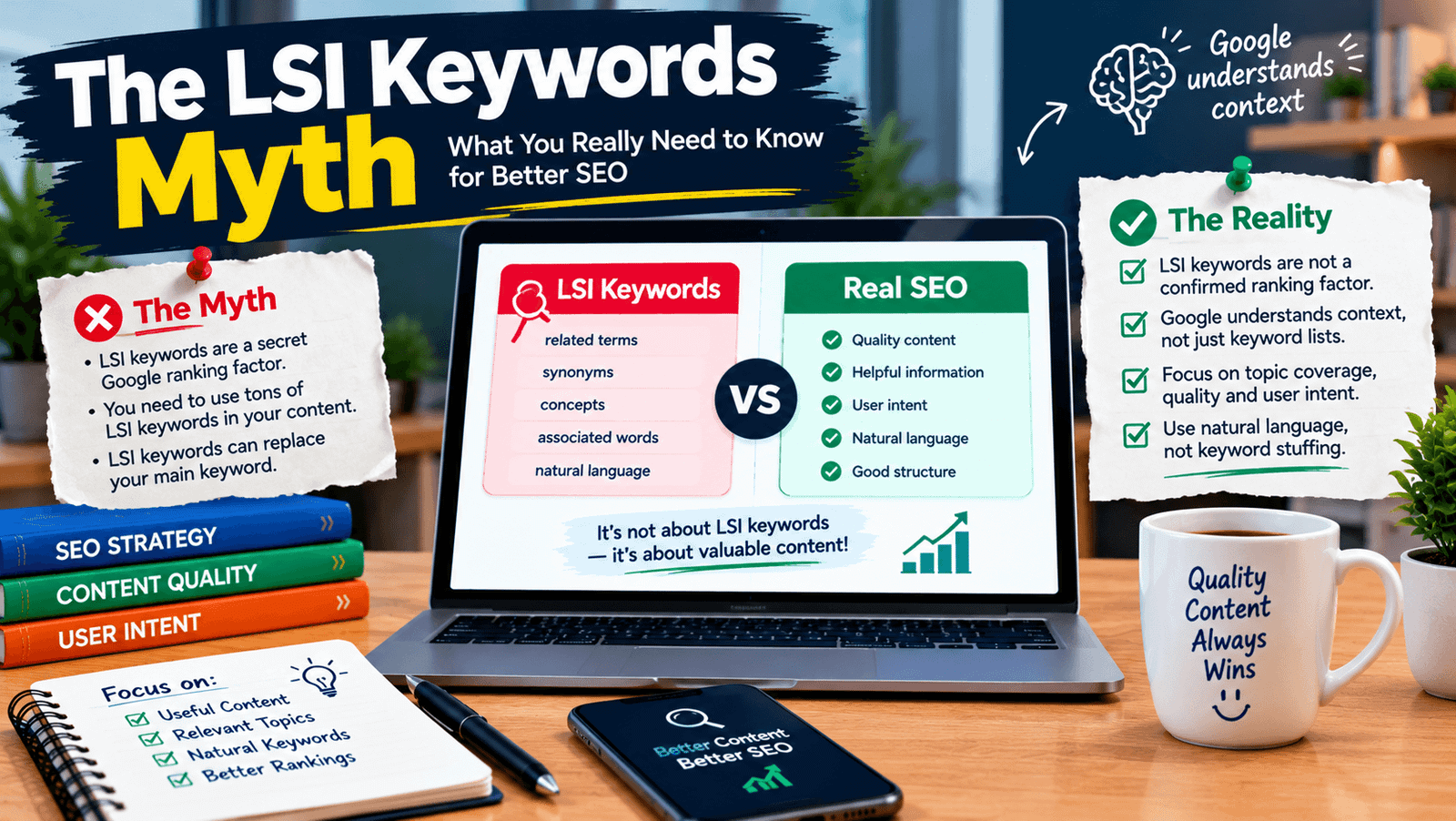
Most so-called LSI keyword tools do not use latent semantic indexing at all. They usually show related searches, common phrases, or words that appear on top pages. That information can be helpful, but the name is wrong and the promise is false. Some tools suggest words that do not fit your page, which leads to awkward writing. If you use such a tool, treat it as a simple idea list, and keep only the words that truly belong in your text.
Search Intent Matters More
The biggest question is what the searcher wants. Someone who types “best running shoes” wants to compare products, while someone who types “how to tie running shoes” wants steps. If your page does not match that need, no list of words will save it, even if the LSI keywords myth tells you otherwise. Look at the top results to see the kind of pages that appear, such as guides, lists, or product pages. Then build your page to match. Meeting the need is the real work behind good content.
A Simple Example
Imagine you write about “wireless speakers.” A person who follows the myth finds a list of LSI keywords and adds each one, even if it does not fit. A person who follows good writing thinks about the reader. They explain wifi range, battery life, sound quality, and setup, because buyers care about those things. The second page reads smoothly and answers real questions. It will likely include many related words, but they appear naturally, not because of any list.
How to Write Naturally with Related Words
Write your first draft without checking any list. Focus on explaining the topic as if talking to a friend. After that, read the draft and ask what a curious reader might still wonder. Add short sections for those questions. Replace repeated words with clear synonyms when it helps. Read the page out loud, and fix any sentence that sounds forced. This simple process gives you natural variety in your words and keeps your writing easy to read.
Common Mistakes Caused by the LSI Keywords Myth
The myth leads to a few common errors. Some writers paste long lists of words into the page just to include them. Others add off-topic words that confuse readers. Some skip checking search intent because they believe the right words are enough. A few spend money on tools that promise special results. Many forget to update old posts with real new information. The LSI keywords myth pulls attention away from quality, which is what actually helps pages grow.
Tips for Better Content
Choose one clear main keyword per page. Write helpful, honest answers and use simple words. Cover subtopics that readers expect, and use examples. Add related words only where they fit. Keep paragraphs easy to read, and use headings to guide the reader. Update old posts when facts change. Ask real people to read your draft and tell you what is unclear. These habits are free, they work for any topic, and they do not depend on the LSI keywords myth.
Final Thoughts on the LSI Keywords Myth
The LSI keywords myth lasts because it sounds smart and gives writers an easy checklist. But good SEO is not about secret word lists. It is about understanding your topic, matching what searchers want, and explaining things clearly. Use related words naturally, learn from real search results, and focus on being useful. When you drop the LSI keywords myth, writing becomes simpler, more honest, and often better for both readers and search engines.