Introduction
Creating content that ranks well on Google is both an art and a science. You need to understand what search engines are looking for, how your audience searches for information, and what changes you can make to improve your content’s visibility. This is where an SEO content analyzer becomes an invaluable tool in your digital marketing toolkit. In this comprehensive guide, you will learn everything you need to know about SEO content analyzers, how they work, and how to use them effectively to improve your website’s search rankings.
What Exactly Is an SEO Content Analyzer?
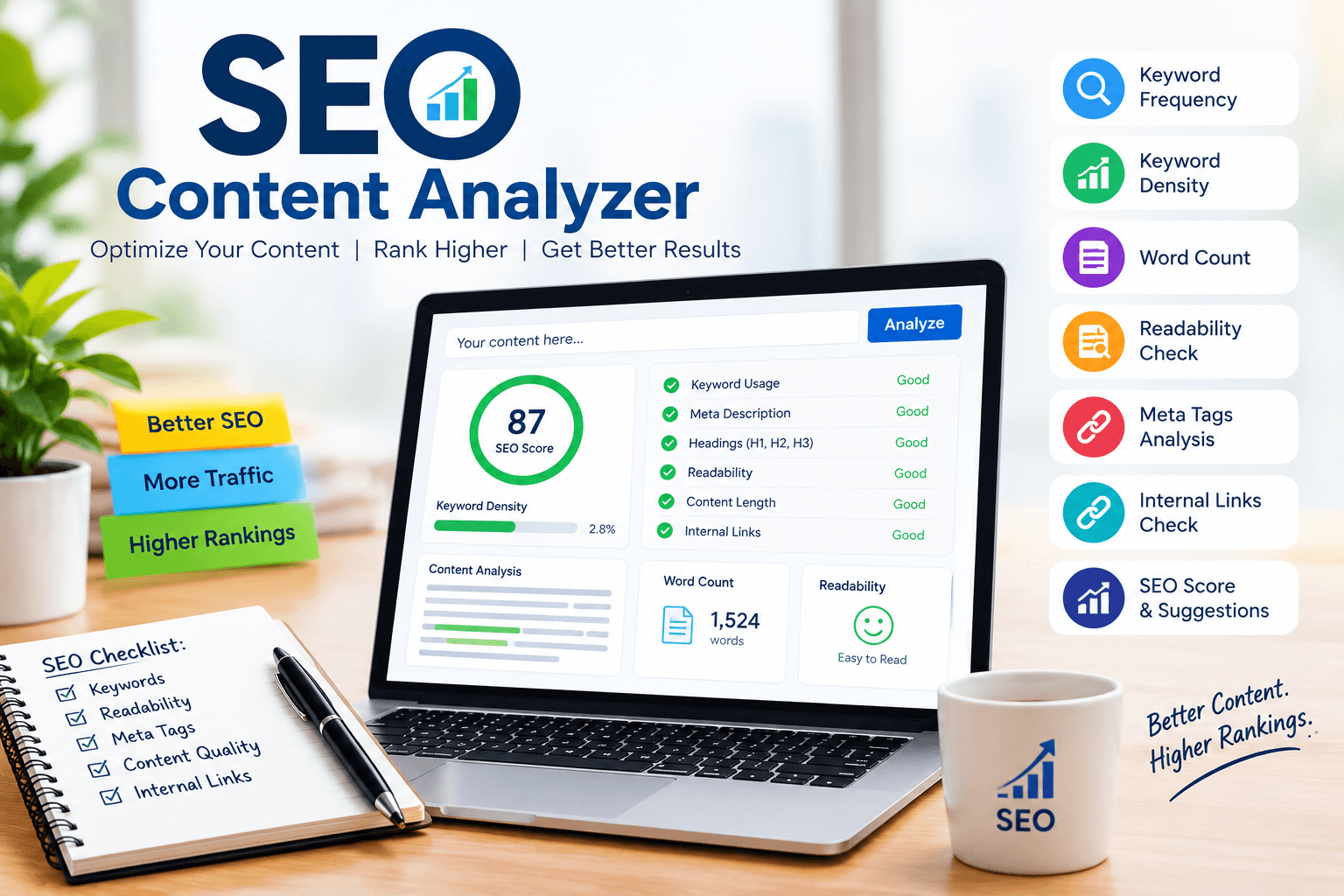
An SEO content analyzer is a digital tool that examines your written content and provides detailed feedback about how well it is optimized for search engines. These tools evaluate various elements of your content including keyword usage, readability, structure, and technical factors that affect how search engines interpret and rank your pages. Think of an SEO content analyzer as a quality control system for your content that tells you exactly what needs improvement.
Most SEO content analyzers work by having you paste your content into their interface along with your target keyword or phrase. The tool then processes your text and generates a report that scores your content on multiple factors and provides specific recommendations for improvement. This instant feedback helps you optimize your content before publishing rather than discovering problems after your content fails to rank.
Why Should You Use an SEO Content Analyzer?
Many content creators wonder why they should bother with SEO content analyzers when they can simply write good content and trust that search engines will recognize quality. The truth is that even the best-written content can fail to reach its audience if it is not properly optimized for search. Search engines are automated systems that rely on specific signals to determine what your content is about and whether it deserves to rank for relevant queries.
An SEO content analyzer takes the guesswork out of optimization by providing objective, data-driven feedback. It identifies issues you might have missed, highlights opportunities for improvement, and helps you understand exactly what changes will have the biggest impact on your rankings. Without this kind of analysis, you are essentially working blind in a highly competitive search landscape.
How Does an SEO Content Analyzer Work?
SEO content analyzers work by evaluating your content against established best practices for search engine optimization. When you input your content and target keyword, the tool typically checks factors like keyword density, which measures how often your keyword appears relative to total word count. It also analyzes keyword placement in critical areas like your title, headings, and opening paragraphs.
Beyond keyword metrics, a quality SEO content analyzer evaluates readability scores based on sentence length, paragraph structure, and vocabulary complexity. It may also check for the presence of related keywords, internal and external links, image optimization, and overall content structure. The tool then combines all these factors into an overall score that tells you how well-optimized your content is and where you have room for improvement.
Understanding the Scoring System
Most SEO content analyzers use some kind of scoring system to communicate how well your content is optimized. These scores typically range from 0 to 100 or use letter grades, with higher scores indicating better optimization. Understanding what these scores mean and how to improve them is essential for getting the most value from your SEO content analyzer.
A score in the 80 to 100 range generally indicates excellent optimization that meets or exceeds best practices. Scores between 60 and 80 suggest room for improvement but generally acceptable optimization. Scores below 60 typically indicate significant optimization issues that are likely limiting your content’s search visibility. However, it is important to remember that scores are guidelines, not guarantees, and content quality ultimately matters more than hitting arbitrary numbers.
Keyword Analysis Features
Keyword analysis is at the heart of any SEO content analyzer. These tools evaluate how effectively you are using your target keyword throughout your content. This includes checking keyword density to ensure you are using your keyword often enough without overusing it. Most SEO content analyzers recommend keeping your primary keyword density between 1% and 3% for optimal results.
Beyond simple density calculations, advanced SEO content analyzers evaluate keyword placement in critical locations like your title tag, main heading, subheadings, and first paragraph. They also identify secondary keywords and LSI (Latent Semantic Indexing) terms that can strengthen your content’s relevance signals. This comprehensive keyword analysis ensures that your content speaks the language that search engines expect to see for your target queries.
Readability Analysis and Why It Matters
Readability is a crucial factor that affects both user experience and search rankings. An SEO content analyzer evaluates your content’s readability by examining metrics like average sentence length, paragraph length, and the complexity of your vocabulary. These tools typically use established readability formulas like Flesch-Kincaid or Gunning Fog to generate a readability score.
Content that is difficult to read tends to have higher bounce rates, meaning visitors leave quickly without engaging with your content. Search engines interpret high bounce rates as a signal that your content did not satisfy the user’s needs, which can hurt your rankings over time. Using an SEO content analyzer to improve readability helps you keep visitors engaged and signals to search engines that your content is valuable.
Content Length Recommendations
Content length is another important factor that SEO content analyzers evaluate. Research consistently shows that longer, more comprehensive content tends to perform better in search results, particularly for competitive keywords. However, length alone is not enough. Your content must also be well-written, focused, and genuinely valuable to readers.
Most SEO content analyzers provide recommendations for ideal content length based on your target keyword and the length of competing content that already ranks well. They might suggest targeting at least 1500 words for competitive topics, or they might indicate that shorter, more focused content is appropriate for your specific query type. Following these recommendations helps you create content that is comprehensive enough to satisfy search engines without unnecessary padding.
Structure and Heading Analysis
The structure of your content plays a significant role in how search engines understand and index your pages. An SEO content analyzer evaluates whether you are using heading tags correctly, with your primary keyword appearing in your H1 heading and related keywords in H2 and H3 subheadings. Proper heading structure helps both search engines and readers navigate your content more easily.
These tools also evaluate the overall organization of your content, checking for logical flow between paragraphs and sections. Well-structured content that covers a topic comprehensively tends to rank better than content that jumps between unrelated ideas. Your SEO content analyzer helps ensure your content is organized in a way that satisfies both algorithmic requirements and human readers.
Internal and External Link Analysis
Links are an important part of SEO that many content creators overlook. An SEO content analyzer evaluates the links within your content to ensure you are providing value to readers and search engines. Internal links connect your content to other relevant pages on your website, helping search engines discover and index more of your content while keeping visitors engaged with your site.
External links to authoritative sources can strengthen your content’s credibility and provide additional value to readers. Your SEO content analyzer checks whether your content includes appropriate internal and external links and whether those links are relevant and useful. This analysis helps you create content that serves as a comprehensive resource that search engines want to rank.
Image and Multimedia Optimization
Images and other multimedia elements enhance the value of your content and improve user engagement, but they also require proper optimization for search engines. An SEO content analyzer evaluates whether your images include appropriate alt text descriptions, file names, and titles that help search engines understand what they depict.
Alt text is particularly important because search engines cannot “see” images the way humans can. Descriptive alt text that includes your target keywords helps search engines understand your images and can drive traffic from image search results. Your SEO content analyzer checks that all images have appropriate alt attributes and provides recommendations for improvement if any are missing or poorly written.
Competitive Analysis Features
Advanced SEO content analyzers often include features that compare your content against what is already ranking in search results. These competitive analysis features help you understand what you are up against and identify opportunities to create content that is better than what currently exists. By analyzing the top-ranking pages for your target keyword, these tools can suggest areas where your content can differentiate itself.
Understanding what works for your competitors helps you set realistic optimization targets and identify gaps in the existing content that you can fill. Perhaps the top-ranking pages all lack certain information that you can provide, or maybe they all have poor readability that you can improve upon. Competitive analysis transforms your SEO content analyzer from a simple checklist tool into a strategic weapon.
How to Use an SEO Content Analyzer Effectively
Using an SEO content analyzer effectively requires more than just running your finished content through the tool and blindly following every recommendation. The most effective approach is to use the analyzer throughout your writing process rather than only at the end. Start by inputting your target keyword and reviewing recommendations before you begin writing. Use these insights to guide your content planning and structure.
As you write, periodically check your progress to ensure you are on track with optimization goals. After completing your draft, run the full analysis and address any remaining issues before publishing. This iterative approach ensures your content is optimized from the start rather than requiring major revisions after the fact. Over time, you will develop an intuitive understanding of SEO best practices that makes the analysis process faster and more effective.
Free Versus Paid SEO Content Analyzers
The market offers both free and paid SEO content analyzer tools, each with distinct advantages and limitations. Free tools typically provide basic functionality like keyword density checking and readability scoring, which is sufficient for casual bloggers and small website owners. They require no financial commitment and can provide valuable insights into content optimization fundamentals.
Paid SEO content analyzers typically offer more comprehensive features including competitive analysis, rank tracking, and integration with other SEO tools. For professional content marketers, agencies, and businesses with significant online presence, paid tools often provide better value through time savings and deeper insights. When choosing a tool, consider your specific needs, budget, and level of SEO expertise.
Common Mistakes to Avoid
Many content creators make mistakes when using SEO content analyzers that undermine their optimization efforts. One of the most common errors is obsessing over scores to the point where natural writing suffers. SEO is important, but it should never come at the expense of creating genuinely valuable content for your audience. Use analyzer recommendations as guidelines rather than rigid rules that must be followed exactly.
Another mistake is ignoring content quality in favor of technical optimization. You can have perfect keyword density and optimal structure, but if your content is poorly written, boring, or unhelpful, it will not rank well or retain visitors. Balance technical optimization with substantive value creation to achieve the best long-term results.
Integrating SEO Analysis Into Your Content Workflow
The most successful content strategies integrate SEO analysis as a regular part of the content creation workflow rather than treating it as an afterthought. Make SEO content analysis part of your editorial calendar and ensure every piece of content goes through optimization review before publication. This consistent approach builds a library of well-optimized content that accumulates ranking power over time.
Many content management systems and SEO plugins now include built-in content analysis features that make this workflow more seamless. These integrations allow you to see optimization recommendations while you are already working on your content, eliminating the need for separate tools and making optimization a natural part of the writing process.
Measuring Your SEO Success
After implementing SEO content analysis and optimization strategies, tracking your results helps you understand what is working and what needs adjustment. Monitor your search rankings, organic traffic, and engagement metrics for pages where you have applied optimization techniques. Comparing these metrics against non-optimized content reveals the impact of your efforts.
If you see improvements in rankings and traffic for optimized pages, consider applying similar techniques to other content on your site. If results are disappointing, analyze what might be going wrong. Perhaps you need higher-quality content, better backlinks, or improvements to other SEO factors beyond on-page optimization.
The Future of Content Analysis Tools
SEO content analyzers continue to evolve as search engine algorithms become more sophisticated and content creation demands increase. Modern tools are incorporating artificial intelligence and machine learning to provide more accurate analysis and personalized recommendations. These advances make content analysis faster, more accurate, and more actionable for content creators at all skill levels.
The future likely holds even more integration between content analysis and content creation, with AI-powered tools that can suggest improvements and optimizations in real time as you write. Staying informed about these developments ensures you can take advantage of new capabilities as they become available.
1 thought on “SEO Content Analyzer: The Complete Guide to Optimizing Your Content for Search Engine Success”