Introduction
Search engine optimization is changing every year. In the past, many website owners focused mainly on adding one keyword several times to their articles. Today, search engines are much better at understanding what a page is about. They look at the meaning of words, the topic of the content, and the information people want when they search online.
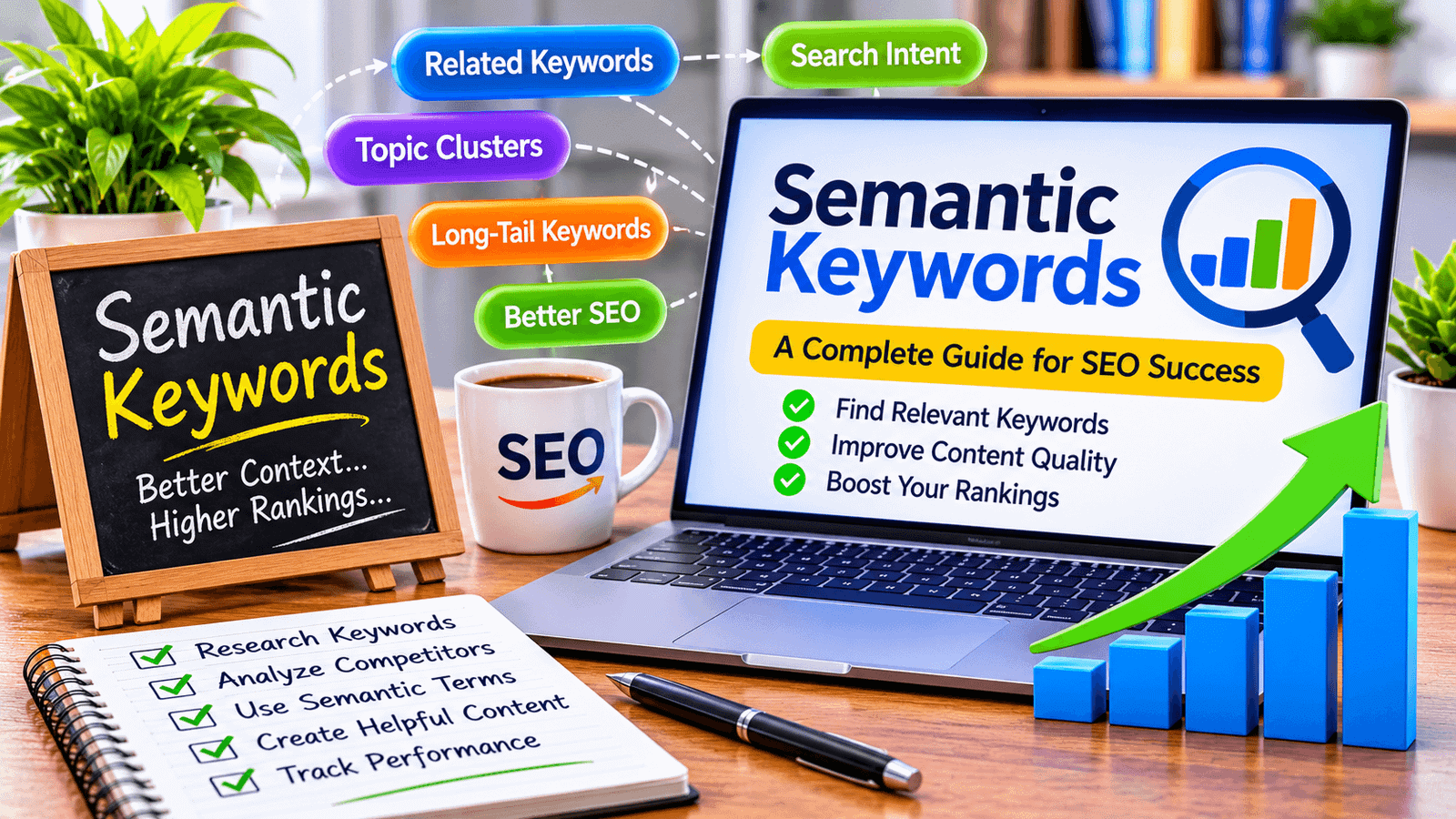
This is where semantic keywords become important. Semantic keywords are words and phrases that are closely connected to your main topic. They help search engines understand the full meaning of your content instead of looking at only one exact keyword. For example, if your main keyword is “digital marketing,” related semantic keywords may include online advertising,
content marketing, search engine optimization, social media marketing, and email campaigns. Using these terms naturally can make your article more useful and complete.
2. What Are Semantic Keywords?
Semantic keywords are words, phrases, and search terms that are related to the meaning of a primary keyword. They may not have exactly the same spelling, but they help explain the same subject from different angles. For example, a page about “healthy eating” may include terms such as balanced diet, nutritious food, vitamins, vegetables, meal planning, and healthy lifestyle.
These related terms give readers more information and help search engines understand the topic. Semantic keywords are not simply synonyms. They can include related questions, connected subjects, common phrases, and specific details that people expect to find in useful content.
3. Why Semantic Keywords Matter for SEO
Semantic keywords matter because search engines try to provide the most helpful results for each search. A page that explains a topic clearly and covers its important details can be more useful than a page that repeats one keyword many times. Related terms help create natural connections between different parts of an article.
They also make content easier to understand because writers can explain a subject using different words instead of repeating the same phrase. When used correctly, semantic keywords can support topical relevance, improve content organization, and help your article answer a wider range of related searches.
4. How Do Semantic Keywords Work?
Semantic keywords work by giving additional context to your main topic. Imagine that you are writing an article about “cloud audio streaming.” If your article also discusses internet-connected speakers, wireless audio, music streaming services, home sound systems, and network connections, search engines can better understand the subject of the page.
These related phrases explain what cloud audio streaming involves. However, adding random related words is not enough. Every keyword should fit naturally into the content and provide useful information to the reader. The goal is to explain the topic properly, not to fill the page with extra terms.
5. Semantic Keywords vs. Primary Keywords
A primary keyword is the main search phrase that describes the topic of your page. Semantic keywords are supporting terms that provide more information about that topic. For example, “keyword research” can be the primary keyword, while “search volume,” “keyword difficulty,”
“long-tail keywords,” and “search intent” can be supporting semantic keywords. Both types are useful, but they have different purposes. The primary keyword helps define the main subject, while semantic keywords help cover related ideas. A strong SEO article uses both in a natural way and keeps the reader’s needs at the center.
6. Semantic Keywords vs. LSI Keywords
Semantic keywords and LSI keywords are often discussed together, but they are not exactly the same thing. LSI stands for Latent Semantic Indexing, a mathematical method for finding relationships between terms in documents. Modern search engines use much more advanced systems to understand language and meaning.
Therefore, writers should not focus on finding a special list of LSI keywords. Instead, they should research related topics, common questions, synonyms, and useful phrases that help explain the subject. The practical goal is to create complete and relevant content rather than follow an outdated keyword formula.
7. Benefits of Using Semantic Keywords
Using semantic keywords can improve an article in several ways. First, they help writers cover a topic more completely by including important details that readers may expect. Second, they can make content sound more natural because writers do not need to repeat the primary keyword in every paragraph.
Third, related phrases can help a page become relevant to different searches connected to its main subject. They also support better content planning because they reveal questions and subtopics that may deserve their own headings. These benefits depend on content quality, search intent, competition, and many other ranking factors.

8. How to Find Semantic Keywords
Finding semantic keywords starts with understanding your main topic. Write down your primary keyword and think about the questions a reader may have. Then search for related phrases using search suggestions, related searches, keyword research tools, and competing pages.
For example, if your topic is “wireless speakers,” you might discover phrases such as Wi-Fi speakers, Bluetooth speakers, multi-room audio, speaker connectivity, and wireless sound systems. Check whether each phrase is genuinely connected to your article. Select the terms that help answer the reader’s questions and leave out unrelated keywords.
9. Use Google Search Suggestions
Google Search suggestions can provide useful ideas about what people search for. Start typing your primary keyword into Google and observe the suggested phrases that appear. These suggestions can reveal common searches and longer keyword variations.
For example, typing “semantic keywords” may lead you to ideas such as semantic keywords in SEO, how to find semantic keywords, and semantic keyword research. You can also review the related searches shown near the bottom of search results. Use these ideas as research clues, not as proof that every phrase has high search volume.
10. Use Keyword Research Tools
Keyword research tools can help you discover related terms, search volume estimates, keyword difficulty, and long-tail keyword ideas. Some popular options include Google Keyword Planner, Ahrefs, Semrush, and other keyword research platforms. Start by entering your primary keyword and reviewing the suggested terms.
Look for phrases that match your topic and the needs of your audience. Do not select keywords only because they show high search volume. A smaller, more specific phrase may be more useful if it matches your article and attracts the right visitors. Always check whether the suggested keyword fits your content.
11. Analyze Search Intent
Search intent means the reason behind a person’s search. Someone searching for “what are semantic keywords” probably wants an explanation. A person searching for “semantic keyword tool” may want to find a tool they can use. Understanding this difference helps you choose the right semantic keywords and create the correct type of content.
Common search intents include informational, navigational, commercial, and transactional. Review the search results for your primary keyword to understand what users expect. If most results are guides, create a helpful guide. If most results are tool pages, consider whether your page should provide a working tool or a detailed tool comparison.
12. Create a Semantic Keyword List
After researching your topic, organize your keyword ideas into a simple list. Separate the primary keyword, secondary keywords, related phrases, long-tail keywords, and question-based keywords. semantic keywords
For example, an article about semantic keywords may use “semantic SEO” as a related phrase, “how to find semantic keywords” as a long-tail phrase, and “why are semantic keywords important?” as a question-based phrase. Organizing your research makes it easier to build an article outline. It also helps you avoid adding the same idea repeatedly under different headings.
13. Group Related Keywords by Topic
Keyword grouping means organizing related search terms into useful topic groups. This makes content planning easier and helps prevent unnecessary repetition. For example, terms such as keyword research, search volume, keyword difficulty, and keyword suggestions can belong to a keyword research group.
Terms such as page titles, headings, internal links, and meta descriptions can belong to an on-page SEO group. Each group can become a section in your article or, when the topic is large enough, a separate article. Make sure each page has a clear purpose and does not simply repeat another page on your website.
14. Use Semantic Keywords in Headings
Headings help readers understand the structure of an article. They also give search engines useful information about the topics covered on a page. Add related keywords to headings when they accurately describe the section. For example, an article about semantic keywords could include headings such as
“How to Find Semantic Keywords,” “Benefits of Semantic SEO,” and “Semantic Keywords vs. Primary Keywords.” Do not force a keyword into every heading. A clear and helpful heading is better than one written only to include another search phrase. Keep your headings organized with a logical H1, H2, and H3 structure.
15. Add Semantic Keywords Naturally in Paragraphs
The best way to use semantic keywords is to include them where they make sense. Explain each idea in simple language and use related terms when they help readers understand the subject. For example, when discussing cloud audio streaming, you might naturally mention internet-connected speakers, wireless networks, audio quality, and multi-room sound.
Avoid repeating the same phrase in every sentence. Keyword stuffing can make an article difficult to read and may harm the user experience. Write for people first, then review your content to make sure the main topic and important supporting ideas are covered.
16. Use Long-Tail Semantic Keywords
Long-tail keywords are longer and more specific search phrases. They often reveal exactly what a person wants to know. Examples include “how to find semantic keywords for a blog,”
“best semantic keyword research methods,” and “how semantic keywords improve SEO content.” These phrases can help you create focused sections that answer specific questions.
They may also face different levels of competition from broad keywords. However, long-tail keywords do not automatically guarantee traffic or rankings. Choose them because they match your audience’s needs and fit naturally into your article.
17. Study Competitor Content
Competitor research can help you discover topics that your article may be missing. Search for your primary keyword and review pages that rank well. Notice the questions they answer, the related subjects they cover, and the way they organize their information.
You can use these observations to identify useful content gaps. Do not copy another website’s sentences, headings, or complete structure. Instead, create your own explanation and add information that makes your page more helpful. Original examples, clear instructions, and practical advice can make your content more valuable.
18. Build Topical Authority With Related Articles
Topical authority means building a strong collection of useful content around a subject. Instead of publishing one article and leaving the topic, create related articles that answer different questions. For example, a website covering SEO tools could publish guides about semantic keywords, keyword density, keyword mapping, search intent, keyword difficulty, and content optimization.
Connect relevant articles using internal links so readers can explore related information. Each article should provide unique value and answer a clear question. Publishing many similar pages with little new information is not a good substitute for useful content.
19. Optimize Your Page Title and Meta Description

Your page title and meta description help explain what a page offers in search results. Include your primary keyword in the title when it fits naturally. Write a clear description that tells readers what they will learn and why the page may help them. For example, “Learn how semantic keywords work, how to find related search terms, and how to use them naturally in SEO content.” Avoid making promises that your article cannot deliver. A relevant title and description can help users understand your page, but they do not guarantee a higher ranking or a particular click-through rate.
20. Improve Content Readability and User Experience
Good SEO content should be easy to read. Use simple words, clear headings, helpful examples, and paragraphs that explain one main idea at a time. Avoid unnecessary technical language when a simple explanation is possible. Add images, tables, or examples when they make the information easier to understand. Check that your website works properly on mobile devices and that pages load smoothly. Visitors should be able to find the information they need without confusion. A useful reading experience supports the overall quality of your website.
21. Common Semantic Keyword Mistakes to Avoid
One common mistake is adding too many related keywords without explaining them properly. Another mistake is choosing phrases that do not match the main topic or search intent. Some writers also repeat keywords in headings and paragraphs simply to increase keyword frequency. This can make content sound unnatural. Avoid copying competitor content, creating several pages that target exactly the same search purpose, or using misleading titles. Semantic keywords should support useful information. If a phrase does not help the reader understand the subject, you probably do not need to include it.
22. How to Measure Semantic Keyword Performance
After publishing your article, monitor its performance instead of assuming that it will rank immediately. Google Search Console can help you review impressions, clicks, average position, and the search queries that bring visitors to your page. Look for relevant searches that your article already appears for. If people search for a related question that your page does not answer clearly, consider improving the content. You can also review engagement and traffic data using suitable analytics tools. Make changes based on useful evidence rather than adding keywords without a clear reason.
23. A Simple Semantic Keyword Research Workflow
Follow this practical process when preparing a new SEO article:
- Choose a primary keyword: Select one phrase that clearly describes your article.
- Find related keywords: Use search suggestions and keyword research tools.
- Check search intent: Understand what information people expect to find.
- Review competing pages: Identify useful subtopics and missing information.
- Group keyword ideas: Organize related phrases into topic groups.
- Create an outline: Turn the most important ideas into clear headings.
- Write useful content: Explain the topic with examples and natural language.
- Optimize the page: Improve the title, description, headings, and internal links.
- Publish and monitor: Use Search Console to review search performance.
- Update when needed: Improve sections that are outdated or incomplete.
This workflow helps you use semantic keywords with a clear purpose instead of adding random phrases to your content.

24. Frequently Asked Questions About Semantic Keywords
What are semantic keywords in SEO?
Semantic keywords are related words and phrases that help explain the meaning of a primary keyword. They give additional context to an article and help cover connected topics.
Are semantic keywords important for Google rankings?
They can support content relevance and topic coverage, but they do not guarantee rankings. Google considers many factors, including content quality, relevance, page experience, and competition.
How many semantic keywords should I use in an article?
There is no fixed number. Use the phrases that naturally support your topic and answer important reader questions. Avoid adding keywords just to reach a target count.
Are semantic keywords the same as synonyms?
No. Synonyms have similar meanings, while semantic keywords can include related subjects, questions, concepts, and specific details connected to the main topic.
Can semantic keywords increase organic traffic?
They may help your page become relevant to more related searches. However, traffic depends on search demand, competition, content quality, and whether your page meets user needs.
Can I use semantic keywords in headings?
Yes. Use them in headings when they accurately describe the information in that section. Clear headings are more important than forced keyword placement.
What is the difference between semantic SEO and semantic keywords?
Semantic SEO is a broader approach to creating content that explains topics and their relationships clearly. Semantic keywords are one part of that approach.
25. Conclusion
Semantic keywords are an important part of modern content planning because they help writers cover a topic in a natural and complete way. By researching related phrases, understanding search intent, organizing keyword groups, and writing useful information, you can create articles that serve readers better. Focus on quality, clarity, and relevance instead of keyword repetition. Review your content regularly and improve it when you discover new questions or missing information. A thoughtful SEO strategy takes time, but consistent work can help build a stronger website.