Introduction
Writing an SEO-friendly article is not just about adding keywords again and again. Your content should provide useful information, answer readers’ questions, and make every paragraph easy to understand. This is where a keyword stuffing checker becomes helpful. It allows website owners, bloggers, and content writers to identify keywords that appear too frequently in an article. When a keyword is repeated unnaturally, the content may become difficult to read and less helpful to visitors.
A good keyword stuffing checker helps you review your writing, find unnecessary repetitions, and improve your overall content quality. In this guide, you will learn how keyword stuffing works, why it can affect SEO, how to check keyword usage, and how to write naturally optimized articles.
1. What Is a Keyword Stuffing Checker?
A keyword stuffing checker is an online tool that helps writers identify excessive keyword repetition in website content. It examines the text and shows how frequently particular words or phrases appear. This information helps content creators understand whether they are using their target keywords naturally or repeating them too often.
For example, if you are writing an article about cloud audio streaming, the tool can show how many times that phrase appears in your content. You can then review the sentences and decide whether some repetitions should be replaced with related terms. The main purpose is to improve readability and maintain a natural writing style.
2. What Is Keyword Stuffing in SEO?
Keyword stuffing is an SEO practice in which a writer adds too many keywords to a webpage in an unnatural way. Some website owners believe that repeating a search phrase many times will help their pages rank higher. However, excessive repetition can make content confusing and unpleasant to read.
For example, writing the phrase “best keyword stuffing checker” in almost every sentence does not provide additional value to readers. Search engines aim to deliver useful and relevant information, not pages filled with repeated search terms. Therefore, website owners should focus on creating meaningful content instead of trying to manipulate rankings through keyword repetition.
3. Why Is a Keyword Stuffing Checker Important?
A keyword stuffing checker is useful because it helps you review your content before publishing it. When writing a long article, it is easy to repeat certain words without noticing. This often happens when writers focus too much on SEO keywords instead of the meaning of their sentences.
By checking keyword frequency, you can identify repeated phrases and improve sections that sound unnatural. It also helps maintain a better balance between optimization and readability. Although using a checker does not guarantee higher rankings, it can support a more natural content strategy and help you create a better experience for your visitors.
4. How Does a Keyword Stuffing Checker Work?
Most keyword stuffing checker tools analyze the text entered by the user. They count individual words, identify repeated phrases, and calculate how frequently certain terms appear in the content. Some tools also display keyword density, word frequency, and repeated phrase information.
After reviewing the results, writers can identify words that appear too often and decide whether they need to edit their content. Different tools may use different methods, so their results can vary. A checker should be treated as a writing assistant rather than a final judge of content quality.
5. Benefits of Using a Keyword Stuffing Checker
Using a keyword stuffing checker offers several benefits for bloggers, website owners, digital marketers, and SEO professionals. It helps identify unnecessary keyword repetition, improves content readability, and makes editing easier. Writers can also use it to review long articles before publishing them.
Instead of manually counting every repeated phrase, they can quickly examine keyword usage through an online tool. Another benefit is that it encourages more natural writing. When you understand how frequently your target keywords appear, you can make better decisions about where they are needed and where they can be removed.
6. How to Check Keyword Stuffing in an Article
Checking keyword stuffing is a simple process. First, prepare the article you want to review. Copy the complete text and paste it into a reliable keyword stuffing checker. Next, analyze the results to identify repeated words and phrases. Pay attention to your main keyword and any related terms that appear frequently.
Read the sentences containing those phrases and decide whether they sound natural. If a keyword does not add meaning to a sentence, consider removing it or using a suitable alternative. Finally, read the article again to make sure the changes have improved its flow and clarity.
7. Keyword Stuffing Checker vs. Keyword Density Checker
A keyword stuffing checker and a keyword density checker are related tools, but they have slightly different purposes. A keyword density checker calculates how often a particular keyword appears compared with the total number of words in an article. A keyword stuffing checker focuses on identifying excessive or unnatural keyword repetition.
Some online tools combine both features and provide information about keyword frequency, phrase repetition, and density. These tools can help writers review their content more effectively. However, a specific density percentage does not automatically determine whether an article is over-optimized. Context and natural language are equally important.
8. What Is a Good Keyword Density?
There is no officially required keyword density percentage that guarantees good Google rankings. Some SEO guides suggest using a target keyword naturally throughout an article, but search engines do not require writers to follow one fixed percentage. Instead of trying to reach an exact number, focus on explaining the topic clearly.
Include your main keyword in relevant locations and use related phrases when they make sense. If a sentence sounds unnatural because you have added a keyword, rewrite it. Your main goal should be to create content that helps readers rather than content designed only to satisfy an SEO tool.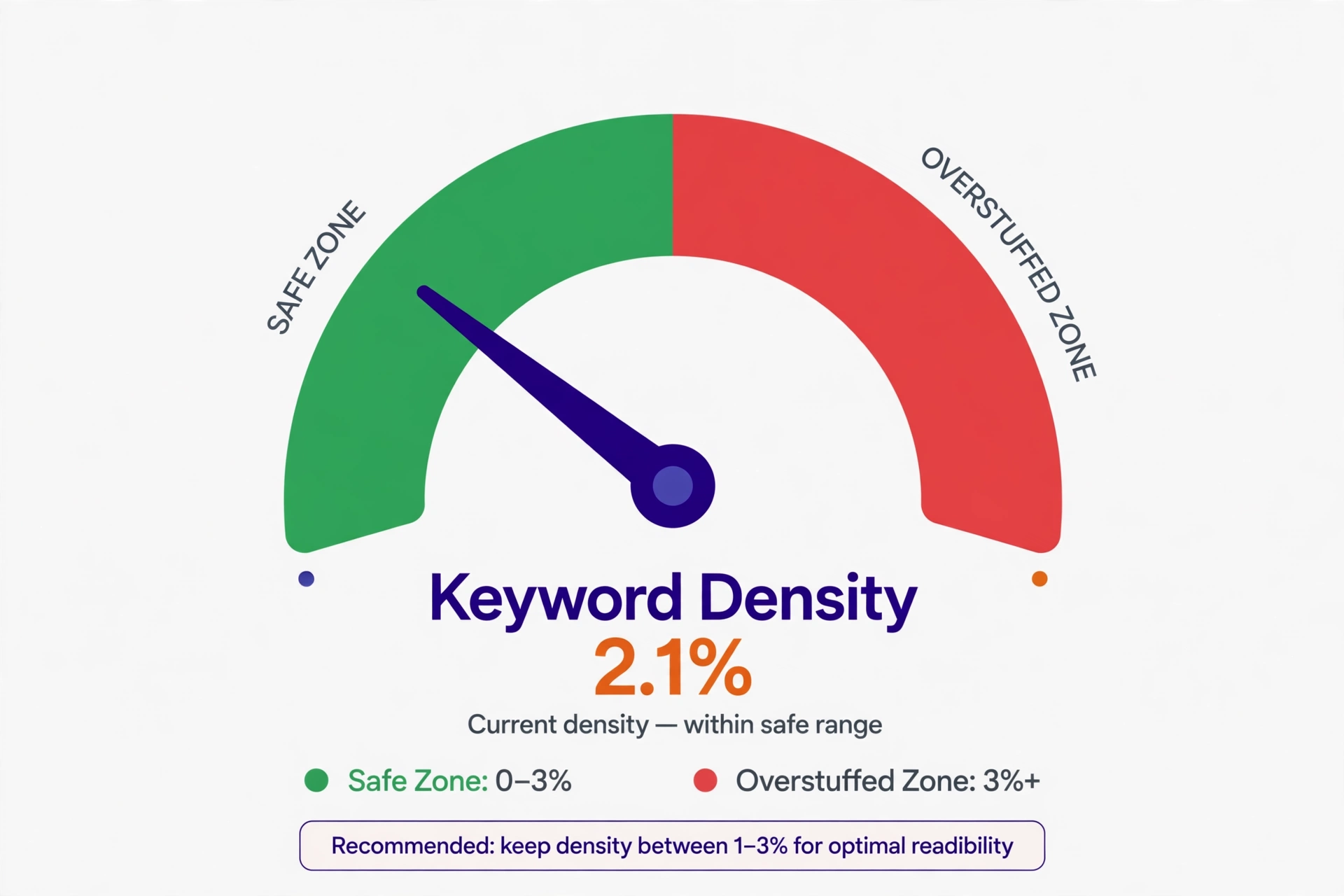
9. Common Signs of Keyword Stuffing
There are several signs that your article may contain keyword stuffing. One common sign is repeating the same phrase in almost every paragraph. Another is adding keywords where they do not fit grammatically or naturally. Some writers also create headings that repeat the exact same keyword without providing different information.
Unnecessary keyword lists, repetitive image descriptions, and awkward sentences can also indicate over-optimization. If your article sounds like it was written for a search engine instead of a human reader, it may need editing. A keyword stuffing checker can help identify these problems before publication.
10. How to Fix Keyword Stuffing
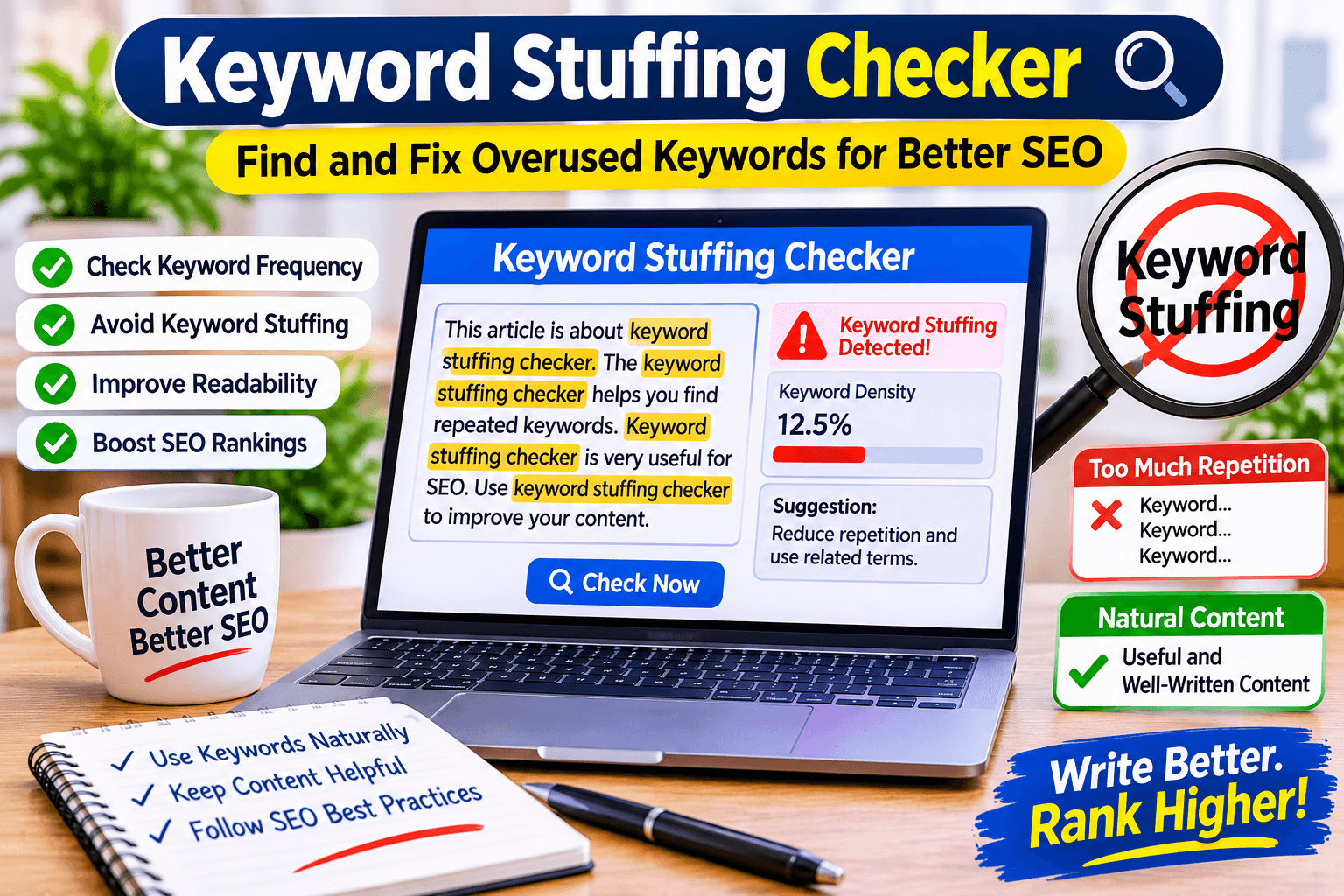
Fixing keyword stuffing does not mean removing every occurrence of your main keyword. Instead, review your article and keep the phrases that provide useful context. Remove unnecessary repetitions and rewrite sentences that sound unnatural. You can also use related words, synonyms, and descriptive phrases to explain the same topic in different ways.
For example, instead of repeating “keyword stuffing checker” in every paragraph, you can sometimes use phrases such as content analysis tool, keyword review tool, or SEO writing checker when they accurately describe the subject. This creates more natural writing and makes your article easier to understand.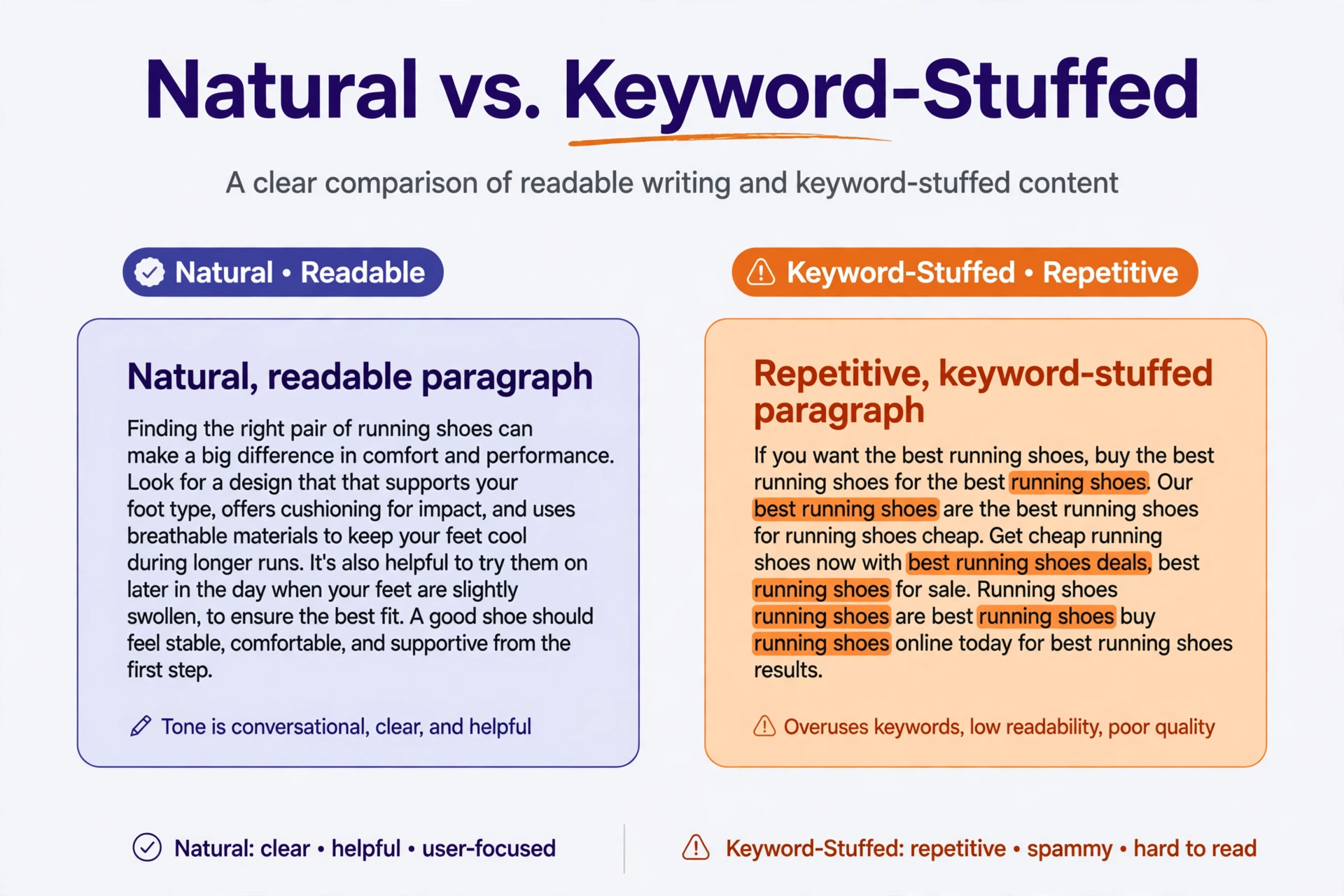
11. Use Related Keywords Naturally
Related keywords help you cover a topic from different angles. When writing about a keyword stuffing checker, you may naturally discuss keyword density, keyword frequency, SEO content analysis, on-page optimization, and content readability. These terms provide additional context and help readers discover useful information about the subject.
However, you should never add unrelated search phrases just because they have search volume. Every related keyword should fit the topic and contribute something meaningful to the article. Natural language is more important than trying to include as many search terms as possible.
12. Improve Readability and User Experience
Readability plays an important role in creating successful website content. Visitors should be able to understand your information without struggling through repetitive or confusing sentences. Use simple words, clear explanations, and descriptive headings. Break complicated ideas into manageable sections and include examples when they make your information easier to understand.
Long paragraphs are useful when they explain a subject in detail, but avoid adding unnecessary sentences just to increase word count. A good keyword stuffing checker can help you find repetition, while careful editing ensures that your article remains useful and enjoyable to read.
13. Avoid Keyword Stuffing in SEO Titles
Your SEO title should clearly describe the subject of your webpage. Including your main keyword can help readers understand what your page offers, but repeating the phrase several times is unnecessary. For example, “Keyword Stuffing Checker: Find and Fix Overused Keywords” is a clear and useful title.
It includes the target phrase while explaining the benefit of the article. Avoid titles that contain multiple repeated variations of the same keyword. A natural and informative title is more appealing than one written only to include search terms.
14. Optimize Your Meta Description
A meta description provides a short summary of your webpage in search results. It should explain what visitors can expect to find after clicking your page. Include your focus keyword naturally when appropriate, and use simple language to describe the main benefit of your content.
For example, you can explain that your article helps users find repeated keywords and improve content readability. Avoid writing a description filled with repeated phrases. A clear description can help users understand the page and decide whether it matches their search needs.
15. Use Keywords Properly in Headings
Headings organize your article and help visitors find specific information. You can include your target keyword in relevant headings, but you should avoid repeating it in every heading. Each heading should describe a different section of your article.
For example, headings such as “How to Check Keyword Stuffing” and “Benefits of Using a Keyword Checker” provide useful information without repeating the same phrase unnecessarily. A well-organized heading structure improves navigation and makes long articles easier to read.
16. Keyword Stuffing in Image Alt Text
Image alt text describes the content of an image for visitors who cannot see it and for systems that interpret image information. It should explain what the image actually shows. If your image demonstrates a keyword stuffing checker, a suitable alt text could be “Online keyword stuffing checker showing repeated phrases in website content.”
Avoid using the same focus keyword in every image description. Accurate and descriptive alt text is more helpful than unnecessary keyword repetition.
17. Best Practices for SEO-Friendly Writing
Creating SEO-friendly content requires a balance between keyword optimization and useful information. Start by understanding what your audience wants to learn. Research your topic and prepare a clear article structure before writing. Include your focus keyword in relevant places, but allow your sentences to flow naturally.
related terms, provide original explanations, and include practical examples. After finishing the article, review it with a keyword stuffing checker and make changes where necessary. These practices can help you create content that is easier to understand and more useful to visitors.
18. Who Should Use a Keyword Stuffing Checker?
A keyword stuffing checker can be useful for almost anyone who creates online content. Bloggers can use it to review articles before publishing, while website owners can check existing pages for unnecessary repetition. SEO professionals can use these tools as part of their content audits, and students can use them to improve their writing.
Digital marketing agencies may also find them helpful when reviewing content created for clients. Whether you manage a small blog or a large website, checking keyword usage can support better editing and content quality.
19. Common Mistakes to Avoid When Using a Keyword Checker
One common mistake is believing that a tool’s warning automatically means an article is bad. Automated tools may identify repeated phrases without understanding their full context. Another mistake is removing every repeated keyword, even when it is necessary to explain the topic.
Some writers also focus too heavily on density percentages and forget about readability. Use your keyword stuffing checker to identify possible problems, but always make the final decision based on the meaning of your sentences. Human editing is essential for producing clear and useful content.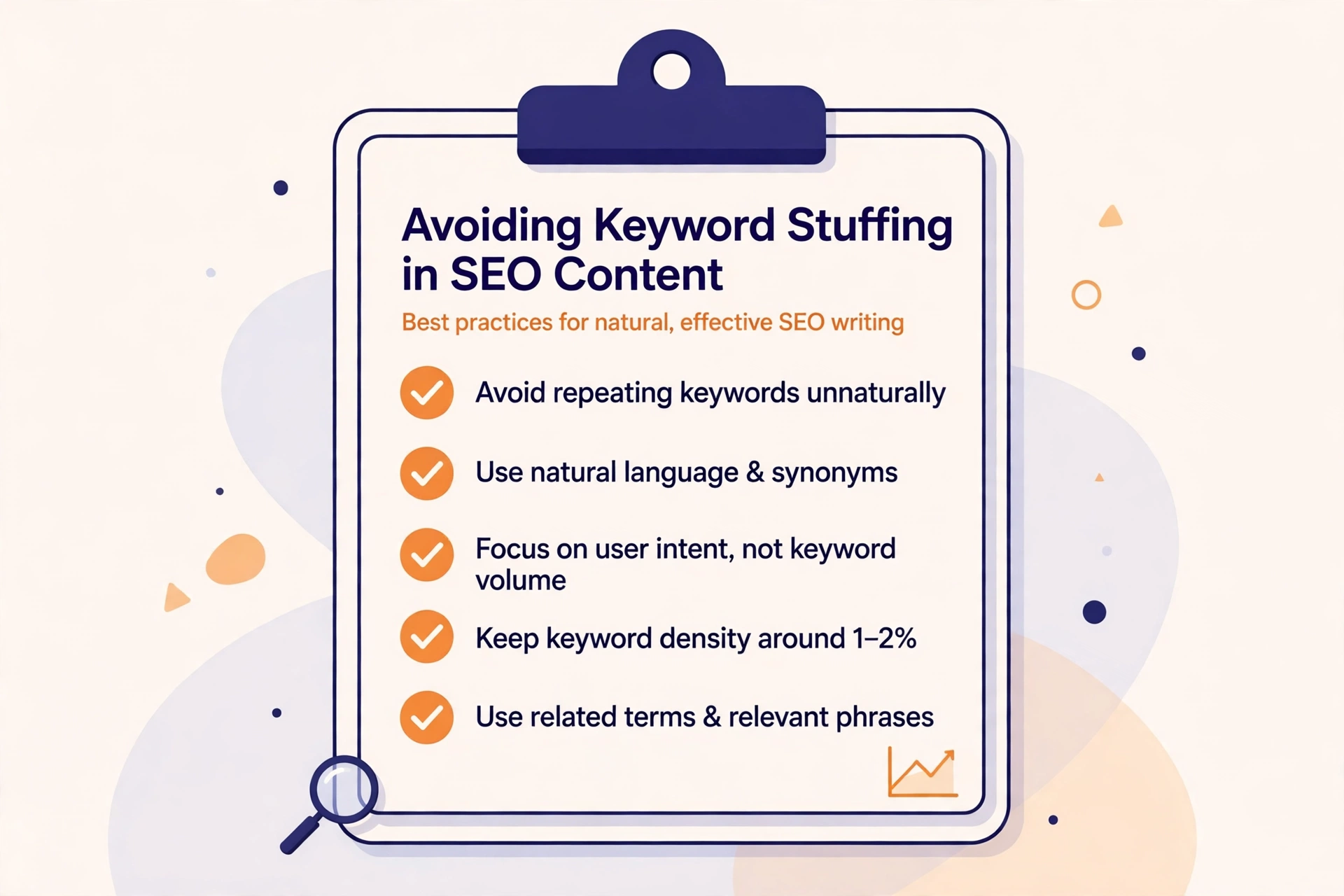
20. How to Choose the Best Keyword Stuffing Checker
When choosing a keyword stuffing checker, look for a tool that is easy to use and provides clear results. It should ideally show word frequency, repeated phrases, and keyword density. A simple interface can make content analysis faster, especially when you regularly publish long articles. It is also helpful if the tool allows you to paste large amounts of text without unnecessary steps.
Before relying on its recommendations, understand how it calculates repetition and remember that different tools may produce different results. The best tool is one that helps you improve your writing without making it complicated.
21. Does Keyword Stuffing Affect Google Rankings?
Excessive keyword repetition can create a poor user experience and may fall under Google’s spam policies when used to manipulate search rankings. However, simply mentioning a keyword several times does not automatically mean your page will receive a penalty. Context matters.
Search engines evaluate many aspects of webpages, including relevance and usefulness. The safest approach is to avoid unnatural repetition and write content that genuinely answers the reader’s questions. Use a keyword stuffing checker as one part of your SEO review process, not as a guarantee of search performance.
Conclusion
A keyword stuffing checker is a helpful tool for improving website content and identifying unnecessary keyword repetition. It allows writers to review keyword frequency, recognize unnatural phrases, and make their articles easier to read. However, good SEO requires more than checking keywords.
You should also focus on original information, helpful explanations, clear headings, relevant internal links, and a positive user experience. By combining natural keyword placement with quality writing, you can build better content for your visitors and create a stronger foundation for long-term SEO growth.
Frequently Asked Questions (FAQs)
1. What is a keyword stuffing checker?
It is an online tool that identifies repeated keywords and phrases in website content to help writers improve natural keyword usage.
2. Is keyword stuffing bad for SEO?
Yes. Excessive and unnatural keyword repetition can create a poor user experience and may violate Google’s spam policies when used to manipulate search rankings.
3. How can I check keyword stuffing for free?
You can use a free online keyword stuffing checker by pasting your article into the tool and reviewing its keyword frequency results.
4. What is the difference between keyword stuffing and keyword density?
Keyword stuffing refers to excessive or unnatural keyword repetition, while keyword density measures how frequently a keyword appears in a piece of content.
5. Can a keyword stuffing checker improve my rankings?
It can help you improve content quality by identifying unnecessary repetitions, but it cannot guarantee higher search rankings.
6. Should I remove all repeated keywords?
No. Keep repetitions that are necessary and natural. Remove only those that make your writing sound awkward or repetitive.
7. Is keyword density still important?
Keyword frequency can be useful when reviewing content, but there is no universal ideal density percentage that guarantees better rankings.