Why Keyword Placement in SEO Matters So Much
When you understand keyword placement in SEO, you are essentially learning how to speak the language that search engines understand. Google and other search engines crawl through billions of web pages every day, looking for content that matches what users are searching for. The way you place your keywords tells these search engines what your content is about and whether it is relevant to a particular query.
If you place your keywords in the right spots, search engines will recognize your content as valuable and relevant, which can lead to higher rankings. On the other hand, poor keyword placement or complete neglect of this practice can result in your content being buried under competitors who have optimized their pages more effectively. This is why mastering keyword placement in SEO should be a top priority for anyone who wants to succeed online.
The Foundation: Choosing the Right Keywords First
Before you can master keyword placement in SEO, you need to start with solid keyword research. Without the right keywords, even the best placement strategy will fall flat. Spend time finding keywords that are relevant to your niche, have decent search volume, and are not overly competitive. Tools like Google Keyword Planner, SEMrush, and Ahrefs can help you identify words and phrases that your target audience is actively searching for.
Once you have your list of keywords, think about which ones you want to prioritize. It is generally better to focus on a primary keyword for each page or article, with a few secondary keywords supporting it. This focused approach makes it easier to create cohesive, well-optimized content that search engines can easily understand and rank.
The Title Tag: Your First Opportunity for Keyword Placement in SEO
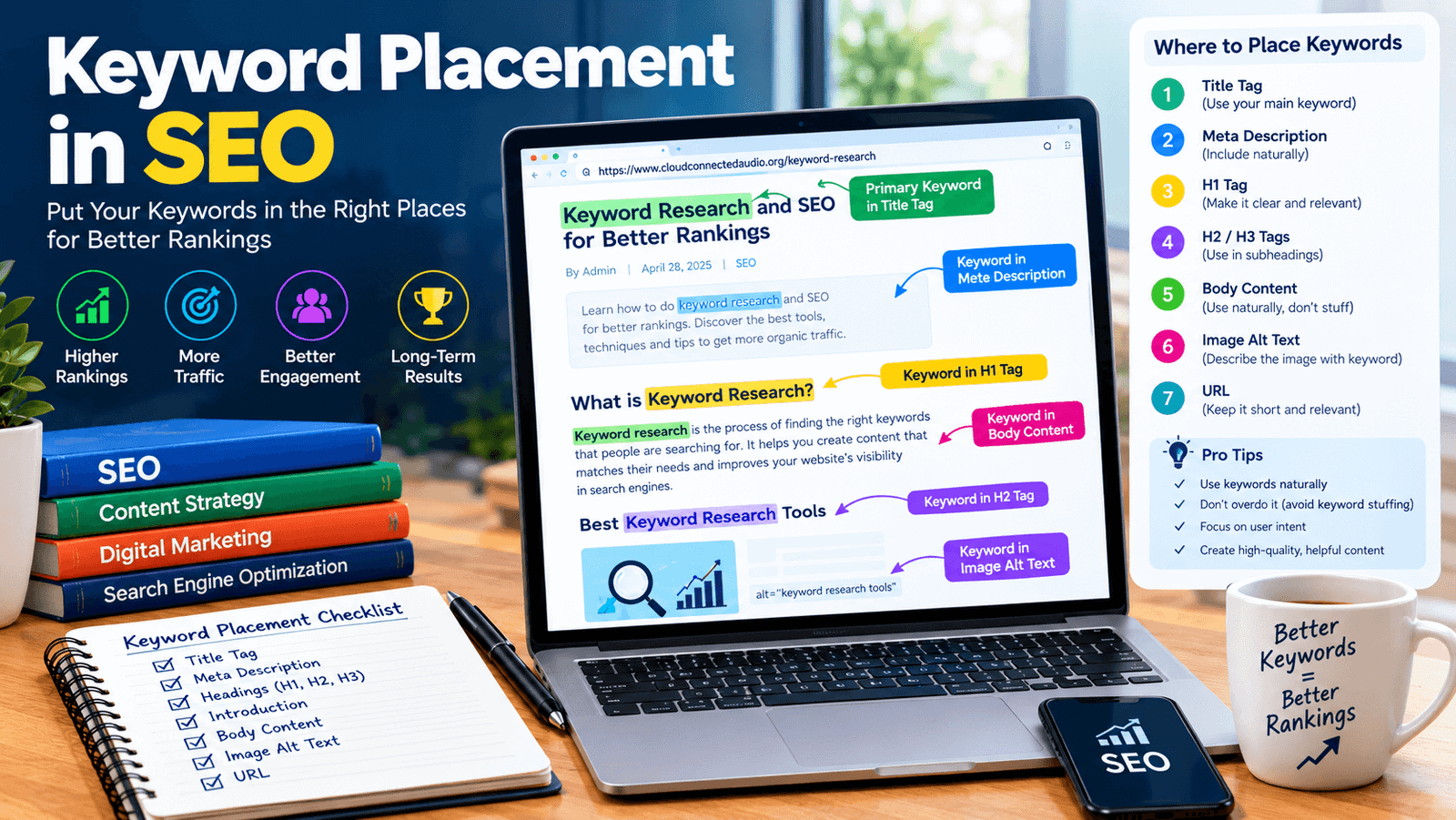
The title tag is one of the most critical places to include your primary keyword. This is the clickable headline that appears in search engine results, and it tells both users and search engines what your page is about. When crafting your title tag, try to place your main keyword as close to the beginning as possible, as this can improve your click-through rate and signal relevance to search algorithms.
A good title tag should be compelling enough to encourage people to click, while also being clear and descriptive. For example, if your keyword is “keyword placement in SEO,” your title could be “Keyword Placement in SEO: A Complete Guide for Higher Rankings.” This puts the keyword right at the start and gives users a clear idea of what they can expect from the content.
Meta Descriptions and Keyword Placement in SEO
While meta descriptions do not directly influence your search rankings, they play a crucial role in your overall SEO success. A well-written meta description that includes your target keyword can improve your click-through rate by making your search result stand out to users. When people see their search terms highlighted in the meta description, they are more likely to click on your link.
When writing meta descriptions for keyword placement in SEO purposes, aim for around 150 to 160 characters. Include your primary keyword naturally within this short summary, and make sure it accurately reflects the content of your page. A compelling meta description can be the difference between someone clicking on your result or scrolling past it to look at competitors.
Headers and Subheadings: Strategic Keyword Placement in SEO
Headers and subheadings are essential for both readability and SEO optimization. Search engines give extra weight to keywords that appear in header tags, particularly the H1 tag, which should contain your primary keyword. In fact, your H1 tag should typically be identical to or very similar to your title tag, as it reinforces the main topic of your content.
When using H2, H3, and other subheadings, try to include variations of your primary keyword or related secondary keywords. This helps search engines understand the structure of your content and see that you are covering your topic comprehensively. For instance, if your primary keyword is “keyword placement in SEO,” you might use subheadings like “Why Keyword Placement in SEO Matters” or “Best Places for Keyword Placement in SEO.” This naturally weaves your keywords throughout the article while also making it easier for readers to scan and navigate your content.
The Opening Paragraph: Setting the Stage for Keyword Placement in SEO
The first paragraph of your content is another crucial spot for keyword placement in SEO. Search engines pay close attention to the beginning of your content to determine what the page is about. By including your primary keyword in the opening paragraph, preferably within the first 100 words, you send a strong signal about the topic of your content.
However, it is important to make this placement feel natural rather than forced. Write a compelling introduction that hooks your readers while also incorporating your keyword in a way that flows naturally. Stuffing your keyword into the first paragraph just for the sake of SEO will not only hurt your rankings but also turn off readers who are looking for genuine value.
Body Content: Where Keyword Placement in SEO Gets Interesting
The body of your content is where you have the most room to work with your keywords. While it is important to include your primary keyword throughout the body, you should also aim for a natural distribution that does not feel repetitive or artificial. A good rule of thumb is to aim for a keyword density of around 1% to 2%, meaning your keyword should appear roughly once or twice for every 100 words of content.
Beyond your primary keyword, you should also incorporate related keywords, synonyms, and variations throughout the body. This practice, often called LSI (Latent Semantic Indexing), helps search engines understand the context of your content better. For example, if your main keyword is “keyword placement in SEO,” you might also use terms like “on-page optimization,” “content optimization,” and “search engine rankings” to create a richer, more comprehensive piece that covers the topic thoroughly.
Image Optimization and Keyword Placement in SEO
Images are often overlooked when it comes to keyword placement in SEO, but they offer a valuable opportunity to boost your optimization efforts. Every image on your page should have an alt attribute that describes what the image shows. Including your target keyword in image alt text can help your content rank in image search results and provide additional relevance signals to search engines.
When adding alt text, make sure it is descriptive and relevant to the image. Avoid keyword stuffing with your images, as this can be seen as spammy and may result in penalties. Instead, write natural, helpful descriptions that include your keywords when appropriate. For instance, if you have an image showing keyword placement examples, your alt text could be “keyword placement in SEO example showing proper header tag usage.”
URLs and Keyword Placement in SEO
Your page URL is another important place to consider keyword placement in SEO. A clean, descriptive URL that includes your primary keyword can help both users and search engines understand what the page is about before they even click on the link. For example, a URL like “yourwebsite.com/keyword-placement-in-seo-guide” is much more effective than “yourwebsite.com/page123.”
When structuring your URLs, keep them short and focused. Include only the most important keywords, and use hyphens to separate words for readability. Avoid using numbers or irrelevant characters in your URLs, as these can make them harder to read and less appealing to both users and search engines.
Internal Linking and Keyword Placement in SEO
Internal linking is a powerful but often underutilized aspect of keyword placement in SEO. When you link to other pages on your website, you can use anchor text that contains your keywords to signal to search engines what those linked pages are about. This helps distribute ranking power throughout your site and encourages users to explore more of your content.
When using keyword-rich anchor text for internal links, make sure the links are relevant to the content. Forcing keywords into anchor text where they do not fit naturally can hurt your SEO efforts and frustrate users. Instead, look for natural opportunities to link to related articles or pages using descriptive, keyword-focused anchor text that adds value to the reader.
The Importance of Natural Language in Keyword Placement in SEO
As search engine algorithms become more sophisticated, the importance of natural language in keyword placement in SEO has increased dramatically. Google and other search engines now prioritize content that reads naturally and provides genuine value to users over content that simply stuffs keywords into every available space.
This shift means that you should focus on writing for humans first, with SEO as a secondary consideration. Your content should flow smoothly, answer questions clearly, and provide real value to your readers. When keyword placement in SEO is done correctly, readers should not even notice that keywords are present because they fit seamlessly into the overall narrative of your content.
Common Mistakes in Keyword Placement in SEO
Many website owners and content creators make mistakes when it comes to keyword placement in SEO that can hurt their rankings. One of the most common errors is keyword stuffing, which involves overusing keywords in an attempt to manipulate search rankings. This practice not only looks unprofessional but can also result in penalties from search engines.
Another common mistake is ignoring the placement of keywords in important on-page elements like title tags, headers, and meta descriptions. Some people focus so much on the body content that they forget to optimize these critical areas. Additionally, failing to update your keyword strategy over time can lead to stagnant rankings and missed opportunities for growth.
How to Know If Your Keyword Placement in SEO Is Working
Once you have implemented your keyword placement strategy, you need to monitor your results to see if your efforts are paying off. Tools like Google Analytics and Google Search Console can help you track your rankings, traffic, and user engagement metrics. Pay attention to which pages are performing well and which ones are struggling to gain traction.
If you notice that certain pages are not ranking as well as expected, review your keyword placement and make adjustments as needed. Sometimes small tweaks, like moving a keyword to a more prominent position or adding it to a subheading, can make a significant difference in your search performance. The key is to stay persistent and continue refining your approach over time.
Keeping Up with Changes in Keyword Placement in SEO
The world of SEO is constantly evolving, and what works today may not work tomorrow. Search engines regularly update their algorithms to provide better results for users, which means your keyword placement strategies must adapt accordingly. Stay informed about the latest SEO trends and best practices by following reputable industry blogs, attending webinars, and experimenting with new techniques.
Voice search, artificial intelligence, and machine learning are already changing the way people find information online, and these trends will continue to shape the future of keyword placement in SEO. By staying ahead of these changes and continuously improving your skills, you can maintain strong search rankings and ensure that your content remains visible to your target audience.
Building a Sustainable Keyword Placement Strategy
Creating a sustainable keyword placement strategy means thinking beyond individual pieces of content and considering your overall website structure. Develop guidelines for how keywords should be used across your site, including where they appear in titles, headers, body text, images, and URLs. Consistency is key to building a strong SEO foundation that will support your content for years to come.
Additionally, make keyword research and placement a regular part of your content creation process. Rather than treating it as an afterthought, incorporate keyword considerations from the very beginning of your planning phase. This proactive approach will help you create more focused, optimized content that consistently performs well in search results.