Introduction
Local search engine optimization is an important part of growing a business online. Many people use Google to find products, services, shops, and businesses near their homes or workplaces. They often search for a service together with a city, area, or location name. For example, someone may search for “best coffee shop in Faisalabad,” “plumber near me,” or “digital marketing agency in Lahore.” These search phrases are known as local keywords. They help businesses connect with people who are looking for something in a particular location. If you own a small business, manage a website, or provide local services, learning how to find and use local keywords can help you reach the right audience and improve your online visibility.
2. What Are Local Keywords?
Local keywords are search terms that include a location or show that someone wants to find a product or service in a specific area. These keywords can contain a city name, town, neighborhood, street, or phrases such as “near me” and “nearby.” For example, “dentist in Karachi,” “best restaurant in Faisalabad,” and “car repair near me” are local search phrases. They tell search engines that the user is interested in results connected to a particular place. Businesses can use these keywords in website pages, service descriptions, blog articles, and other online content to make their location and services clearer.
3. Why Are Local Keywords Important for SEO?
Local keywords are important because they connect businesses with people who are searching for nearby products and services. A person searching for a bakery in their city may be more interested in visiting a local shop than reading a general article about baking. By using relevant location-based phrases, a business can explain where it operates and what it offers. Local keyword research also helps website owners understand what customers want, which areas they are interested in, and how they describe different services. Although keywords alone cannot guarantee better rankings, using them naturally can support a well-planned local SEO strategy.
4. How Do Local Keywords Work?
Local keywords help search engines understand the location and purpose of a search. When someone types “electrician in Faisalabad,” Google tries to show useful results related to electricians serving that area. Search engines may consider the user’s location, the relevance of a business, its online information, and other ranking factors. A website that clearly describes its services and the areas it genuinely serves can provide useful location information. However, simply adding a city name many times does not make a website locally relevant. The content should explain the service, location, and value offered to customers.
5. Local Keywords vs. General Keywords
General keywords describe a broad topic without mentioning a particular location. For example, “best restaurants” is a general keyword because it does not identify a city or area. A local keyword such as “best restaurants in Islamabad” has a more specific location. General keywords may reach a wider audience, while local keywords help businesses target people searching in particular areas. A restaurant, repair shop, salon, or cleaning company can often benefit from local phrases because its customers usually need services in a specific place. Choosing between general and local keywords depends on your business goals and audience.
6. Benefits of Using Local Keywords
Using local keywords can help a business become more visible to people searching for nearby services. They can attract visitors who are more likely to contact the business, request directions, make an appointment, or visit a physical location. Local keyword research can also reveal customer needs and help businesses create better service pages. For example, a home cleaning company may discover that people search for deep cleaning, office cleaning, and move-out cleaning in different areas. This information can help the company explain its services more clearly and build pages that answer real customer questions.
7. Types of Local Keywords
There are several types of local keywords, and each can support a different part of your SEO strategy. Location-based keywords include city or neighborhood names, such as “salon in Faisalabad.” Near-me keywords include phrases such as “car wash near me.” Service-based keywords describe what a person needs, such as “emergency plumbing service.” Long-tail local keywords are more detailed, such as “affordable home cleaning service in Lahore.” Question-based local keywords include searches like “where can I find a good dentist in Karachi?” Understanding these types helps you build a keyword list that matches different customer needs.
8. How to Find Local Keywords
Start by writing down the main products or services your business provides. Next, add the names of the cities and areas where you genuinely serve customers. For example, a computer repair shop may begin with “computer repair,” then create location variations such as “computer repair in Faisalabad” and “laptop repair near D Ground.” Use Google search suggestions, keyword research tools, competitor websites, and customer questions to discover more phrases. Review every suggestion carefully and select terms that match your actual services. A useful local keyword list should focus on real customer searches rather than random combinations of service and city names.
9. Use Google Search Suggestions
Google Search suggestions are a simple way to discover local keyword ideas. Type a service name into Google and add a city or area to see related searches. For example, entering “photographer in Lahore” may show suggestions connected to wedding photography, event photography, or professional photo studios. You can also review related searches near the bottom of the results page. These suggestions help you understand how people describe their needs. Remember that suggestions do not always provide exact search volume, so use them as research ideas and check important keywords with other tools when possible.

10. Use Google Keyword Planner
Google Keyword Planner is a useful tool for researching search terms and discovering keyword ideas. You can enter your main service keyword and select a location to explore related searches. For example, a business offering plumbing services can investigate phrases such as “plumber,” “emergency plumber,” and “pipe repair” while focusing on its service area. The tool may provide estimated search ranges and competition information depending on the account and settings. Use this information to compare keyword ideas, but do not choose phrases only because they show higher search volume. Relevance to your business is more important than selecting a popular but unrelated term.
11. Research Your Local Competitors
Competitor research can help you understand which services and locations other businesses discuss on their websites. Search Google for your main service in your target city and review businesses that appear in the results. Look at their page titles, service descriptions, location information, and frequently discussed topics. You may discover useful ideas that your website does not cover yet. Do not copy their content or create pages that repeat the same information. Instead, identify customer questions that are not answered clearly and provide better explanations, accurate service details, and original information about your business.
12. Understand Local Search Intent
Local search intent is the reason someone searches for a business or service in a particular location. A person searching for “best dentist in Karachi” may be comparing local options, while someone searching for “dentist appointment in Karachi” may be ready to book. Understanding this difference helps you create the right type of page. Common local searches can involve finding information, comparing businesses, checking opening hours, requesting directions, or contacting a service provider. Your content should match what people expect to find. Include useful details such as services, service areas, contact information, and appointment instructions when they apply.
13. Use City Names in Page Titles
Page titles help readers and search engines understand what a page is about. If you serve a particular city, include its name in the title when it accurately describes the page. For example, a plumbing company may use “Professional Plumbing Services in Faisalabad.” A restaurant might use “Family Restaurant in Islamabad.” Keep titles natural and clear instead of adding a long list of city names. Each important service page should have a title that describes its main purpose. Avoid creating misleading location pages for areas where your business does not actually operate.
14. Add Local Keywords to Meta Descriptions
A meta description is a short summary that may appear below your page title in search results. It should explain what the page offers and encourage the right visitors to learn more. For example, a cleaning company could write, “Looking for home cleaning services in Lahore? Explore our cleaning options, service details, and booking information.” Include your local keyword naturally when it fits. Do not fill the description with repeated city names or make promises that your business cannot support. A useful description should be clear, relevant, and honest.
15. Create Location-Based Landing Pages
A location-based landing page is a page designed for a particular service area. For example, a company that provides cleaning services in Lahore may create a page explaining its services in that city. The page should contain original and useful information, including service details, customer questions, contact options, and accurate coverage information. If your business serves multiple locations, create separate pages only when you can provide meaningful information for each area. Avoid publishing dozens of nearly identical pages where only the city name changes. Such pages offer little value to visitors.
16. Optimize Your Google Business Profile
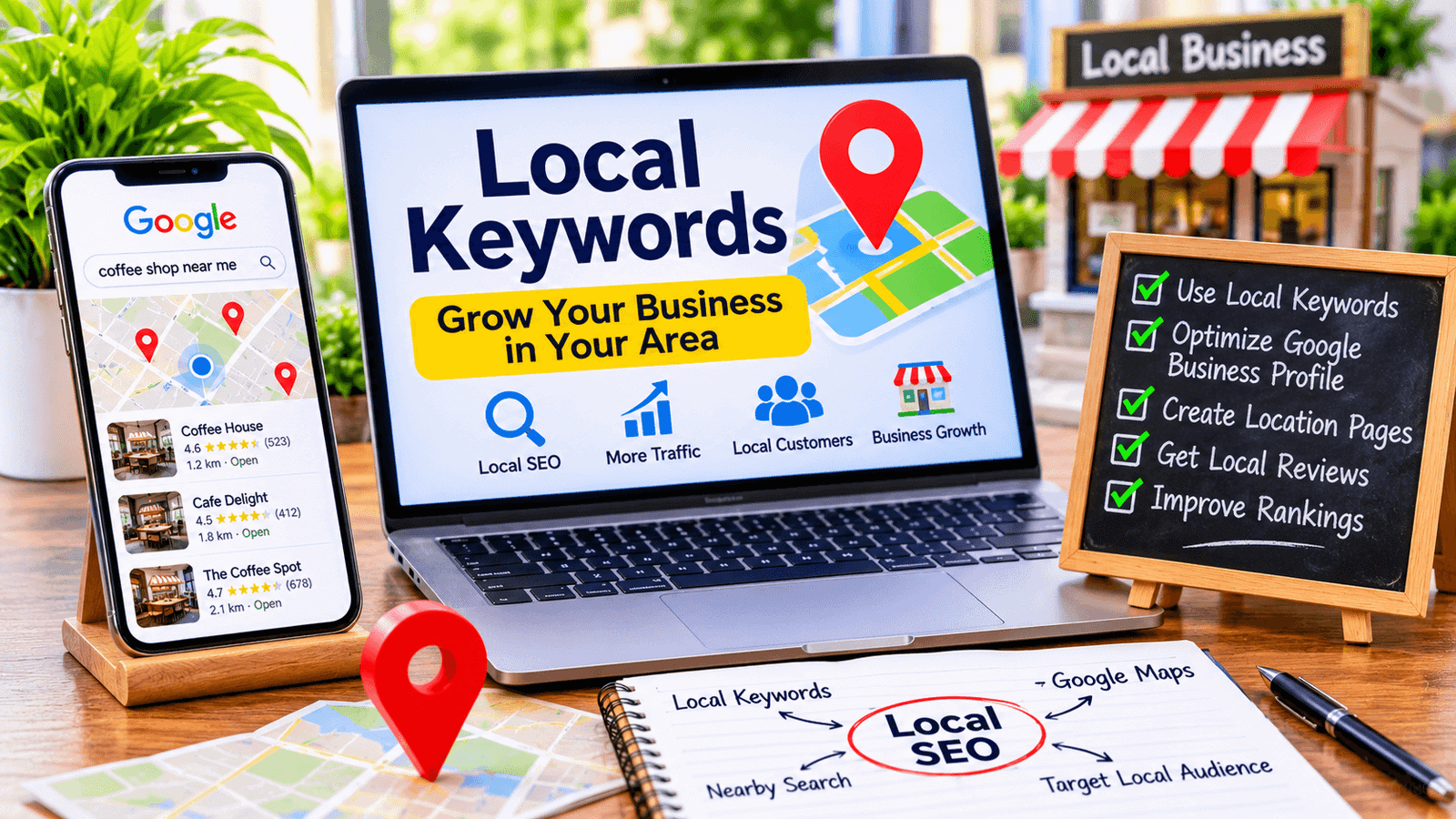
A Google Business Profile helps eligible businesses manage how their information appears on Google Search and Maps. Keep your business name, address, phone number, website, opening hours, and service information accurate. Choose the most relevant business category and describe your actual services clearly. Add genuine photos and respond professionally to customer reviews. If you serve customers at their locations rather than at a public shop, follow Google’s rules for service-area businesses. A complete and accurate profile can help customers understand your business, although profile optimization does not guarantee a particular position in local search results.

17. Use Local Keywords in Website Content
Your website content should explain what your business does and where it provides services. Add local keywords naturally to important sections such as the introduction, service descriptions, headings, and FAQs. For example, a car repair workshop in Faisalabad can discuss vehicle maintenance, brake repair, engine inspection, and its actual service location. Write detailed information that helps visitors make decisions. Avoid repeating the same city name in every paragraph. Your goal is to make the page useful and easy to understand, not to increase keyword frequency without adding information.
18. Add Local Keywords to Image Alt Text
Image alt text describes an image for people who use screen readers and can also help search engines understand image content. Write clear and accurate descriptions of the images on your website. For example, if an image genuinely shows the front of your restaurant, suitable alt text might be “Restaurant entrance in Faisalabad.” If the image shows a particular service, describe that service instead. Do not add location keywords to every image when they are unrelated. Good alt text should describe what is actually visible and provide useful context.
19. Build Local Citations and Business Listings
Local citations are online mentions of your business information, such as its name, address, and phone number. They may appear in business directories, local websites, industry listings, and other platforms. Accurate information helps people identify and contact your business. When creating listings, use consistent business details and select relevant categories. Avoid submitting your website to low-quality directories simply to collect links. Focus on trusted platforms that are useful to your customers and relevant to your industry. Quality and accuracy matter more than having a large number of listings.
20. Get Genuine Local Customer Reviews
Customer reviews can help people understand the experience others have had with your business. Encourage real customers to share honest feedback after using your service. Respond politely to both positive and negative reviews, and try to solve problems when customers raise genuine concerns. Reviews may naturally mention services, products, and locations, but you should never ask people to insert specific keywords or write false reviews. Genuine customer feedback builds trust and helps potential customers make informed decisions. Never purchase fake reviews or offer rewards in ways that violate platform policies.
21. Use Internal Links for Local SEO
Internal links connect related pages on your website. They help visitors find useful information and allow search engines to discover how your pages relate to one another. For example, a page about home cleaning in Lahore may link to separate pages explaining deep cleaning, office cleaning, and booking information. Use descriptive link text so visitors understand what they will find after clicking. Make sure each linked page provides real value. A clear website structure makes navigation easier and helps customers move from learning about a service to contacting your business.
22. Common Local Keyword Mistakes to Avoid
One common mistake is keyword stuffing, which means repeating the same location phrase too many times. This makes content difficult to read and does not guarantee better rankings. Another mistake is creating location pages for areas that a business does not serve. Some website owners also use incorrect business addresses, copy competitor content, or create fake reviews. Avoid these practices because they can mislead customers and damage trust. Choose relevant keywords, provide accurate business information, and publish original content that answers customer questions. A useful local SEO strategy should always focus on honesty and value.
23. How to Track Local Keyword Rankings
Tracking local keyword performance helps you understand whether your SEO work is producing useful results. Google Search Console can show which search queries bring visitors to your website, along with impressions, clicks, and average search position. You can also use suitable local rank-tracking tools to monitor selected search terms in specific locations. Remember that local search results may change depending on the searcher’s location, device, and other factors. Review performance over time rather than judging your strategy from one search. Use the information to improve pages, update business details, and answer missing customer questions.
24. A Simple Local Keyword Research Workflow
Follow this process when preparing a local SEO campaign:
- Choose your main service: Write down the product or service you offer.
- Select your service areas: List the cities and neighborhoods you genuinely serve.
- Find keyword ideas: Use Google suggestions and keyword research tools.
- Check search intent: Understand what local customers want.
- Review competitors: Study relevant local business websites.
- Group keywords: Organize phrases by service and location.
- Create useful pages: Write original content for important services and areas.
- Optimize your profile: Keep your Google Business Profile accurate.
- Build local trust: Collect genuine reviews and maintain accurate listings.
- Track results: Monitor performance and improve your pages regularly.
This workflow helps you build a clear local SEO plan and focus on the searches that matter to your business.
25. Frequently Asked Questions About Local Keywords
What are local keywords in SEO?
Local keywords are search phrases that include a location or show that someone wants a nearby product or service. Examples include “restaurant in Lahore” and “electrician near me.”
Why should small businesses use local keywords?
They help small businesses target people searching for relevant services in their service areas. This can improve local visibility and help potential customers discover the business.
How do I find local keywords for my business?
Start with your main services and target locations. Then use Google suggestions, Keyword Planner, competitor research, and customer questions to discover relevant phrases.
Are near-me keywords important?
Near-me searches can be useful because they show local intent. However, search engines also use the searcher’s location and other information to provide relevant results.
How many local keywords should I use on one page?
There is no fixed number. Use one clear primary topic and include relevant supporting phrases naturally wherever they help explain your services.
Can local keywords improve Google Maps visibility?
Relevant local content can support your overall local SEO efforts, but Google Maps visibility depends on multiple factors, including relevance, distance, and prominence.
Should I create a separate page for every city?
Only create separate pages when your business genuinely serves those areas and you can provide useful, original information for each location.
26. Conclusion
Local keywords can help businesses connect with customers who are searching for products and services in specific areas. By choosing relevant phrases, understanding search intent, creating useful location pages, and keeping business information accurate, you can build a stronger local SEO strategy. Do not focus only on keyword repetition or search volume. Focus on helping people find the right service and understand why your business is a suitable choice. Consistent improvements, useful content, genuine reviews, and accurate information can support long-term online growth.
Short Paragraph: Local keywords help your business reach people searching for nearby services. Research the right phrases, include your real service areas, and create helpful website content. Focus on customer needs, accurate information, and a strong local SEO strategy to improve your online presence.