Introduction
Keyword gap analysis is an important SEO technique that helps website owners discover search terms their competitors are ranking for but their own websites are missing. It gives you a better understanding of your competition and helps you find new opportunities to attract visitors from search engines. Many websites publish articles regularly but still struggle to receive organic traffic because they are not targeting the right keywords. By studying competitor websites and comparing their keyword rankings with your own, you can identify missing topics, improve existing pages, and plan useful new content. Whether you manage a small blog, an online store, or a business website, keyword gap analysis can help you build a stronger content strategy and reach more people through search engines.
1. What Is Keyword Gap Analysis?
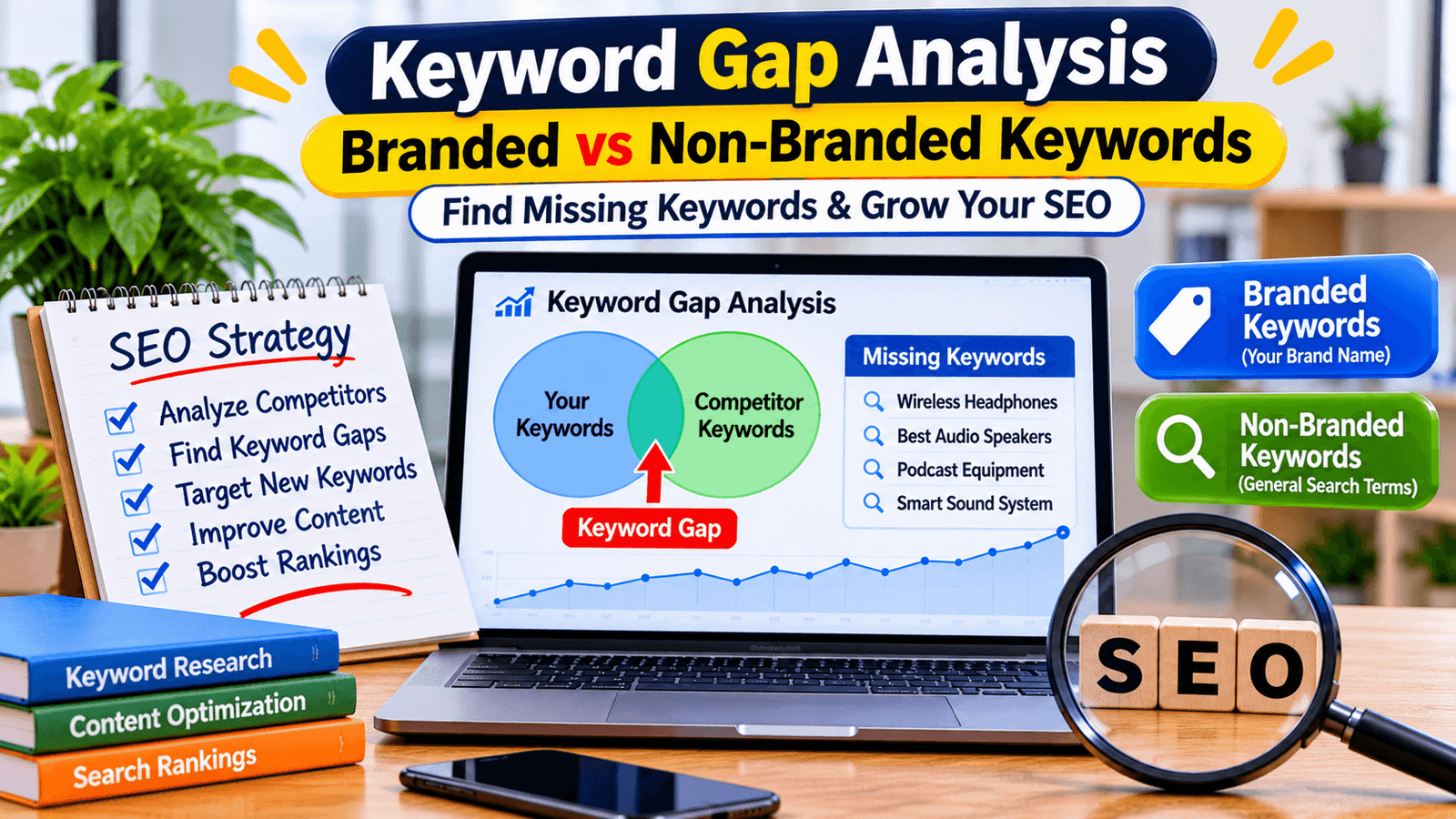
Keyword gap analysis is the process of comparing your website’s keyword rankings with those of competing websites to find keywords you are not targeting effectively. These missing keywords may represent valuable opportunities to create new articles, improve existing pages, or expand your website’s content. For example, if your website publishes articles about audio technology but your competitors receive traffic from searches about wireless multi-room speakers, you may have an opportunity to cover that topic. The purpose is not to copy competitors but to understand what your audience is searching for and provide better, more useful information.
2. Why Is Keyword Gap Analysis Important for SEO?
Keyword gap analysis helps you make better SEO decisions by showing where your website has content opportunities. Instead of choosing article topics randomly, you can use competitor research to discover subjects that already attract search interest. It can also help you identify weaknesses in your current content strategy and find relevant keywords that you may have overlooked. This process is especially useful for growing websites because it provides direction for future content creation. When you target relevant search terms and answer users’ questions properly, you can improve your website’s relevance and create more opportunities for organic search traffic.
3. How Does Keyword Gap Analysis Work?
The process usually starts by selecting your website and a few competing websites that target a similar audience. You then collect keyword information for each website and compare the results. SEO tools can show which search terms competitors rank for, which keywords your website shares with them, and which terms are missing from your content. After collecting this information, review each keyword to understand its meaning, search intent, competition, and relevance. Finally, organize the best opportunities into a content plan. This process turns competitor research into practical SEO actions rather than simply creating a large list of search phrases.
4. What Are Keyword Gaps?
Keyword gaps are relevant search terms that competing websites rank for but your website does not target or rank for effectively. These gaps can reveal missing content, weak pages, or subjects that your website has not covered yet. For example, a competitor may have a detailed guide about cloud audio streaming while your website only has a general article about wireless speakers. That missing topic could represent an opportunity to publish a more complete guide. However, not every competitor keyword is useful. You should focus on search terms that match your website’s subject and provide genuine value to your audience.
5. Types of Keyword Gaps
There are several types of keyword gaps worth checking during an SEO audit. Content gaps occur when competitors have useful articles about topics your website has not covered. Ranking gaps happen when competitors appear higher in search results for keywords you also target. Long-tail keyword gaps involve specific search phrases that your website may be missing. There can also be commercial keyword gaps when competing businesses rank for product or service searches that your website does not cover. Understanding these differences helps you decide whether to create a new page, improve an existing article, or strengthen your website’s overall content structure.

6. How to Find Competitors for Keyword Gap Analysis
Choosing the right competitors is an important step because inaccurate comparisons can lead to poor keyword decisions. Start by searching Google for your main topics and observing which websites regularly appear in the results. Look for websites that publish similar content and target the same audience. Your business competitors and SEO competitors are not always the same. For example, a small audio technology blog may compete in search results with large technology magazines even if they do not sell the same products. Choose a small group of relevant websites and compare their content to understand where your website can provide something better or different.
7. Use SEO Tools for Keyword Gap Analysis
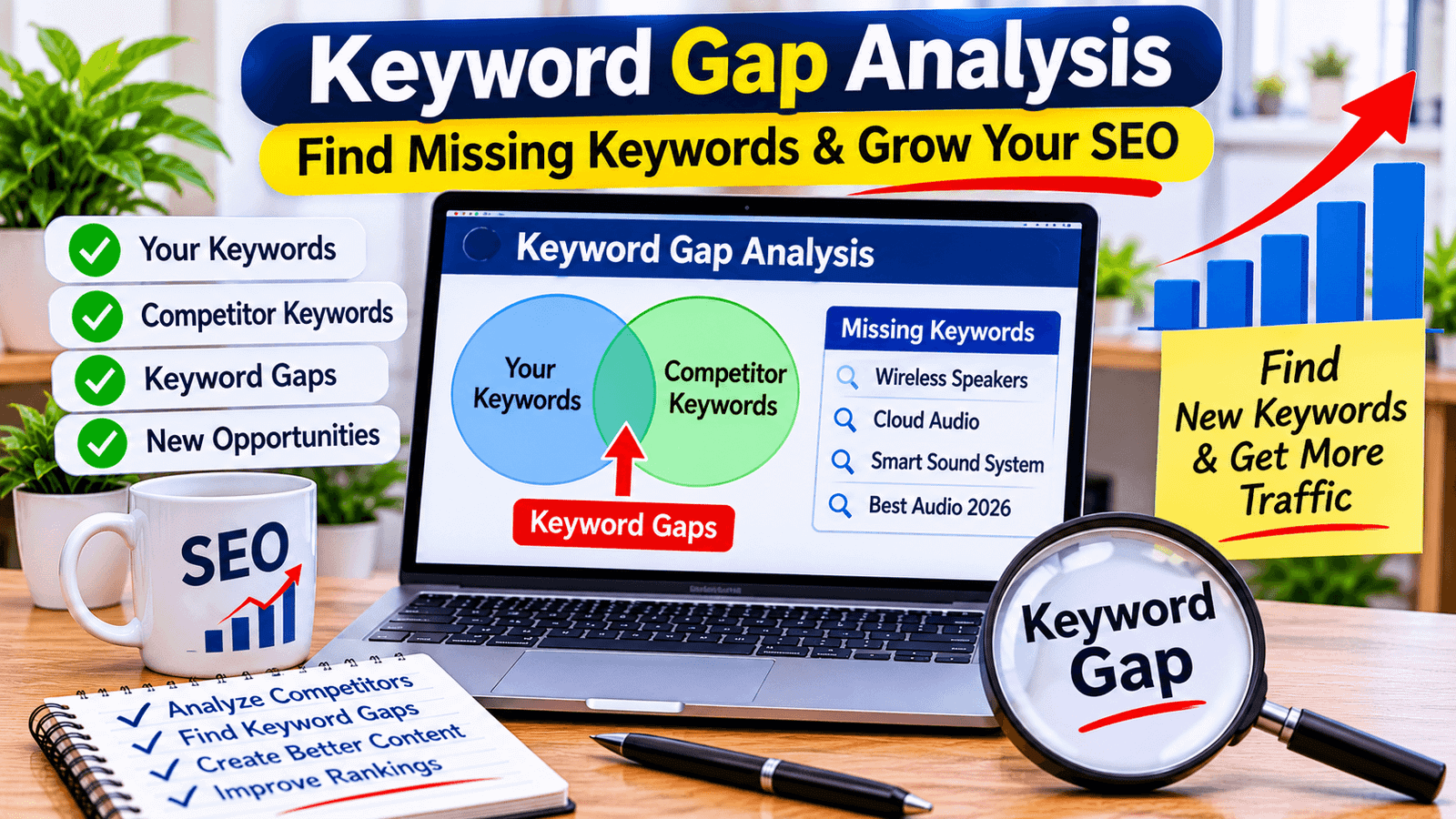
SEO tools make keyword research faster by collecting information about competitor rankings, search terms, and keyword opportunities. Platforms such as Semrush, Ahrefs, and other keyword research tools offer competitor comparison features. Some tools provide keyword overlap reports that show shared keywords and terms competitors rank for but your website does not. You can also use Google Search Console to understand the queries that already bring impressions and clicks to your website. Different platforms have different databases and estimates, so their results may not always match. Use multiple sources where practical and verify important keywords through actual search results.
8. Analyze Your Competitors’ Keywords
After selecting competitors, review the search terms that bring them organic traffic. Look for keywords related to your main website topics, products, and audience questions. Pay attention to the pages ranking for those keywords because they can reveal the type of content searchers expect. For example, a competitor ranking for “best WiFi speakers for home” may have a detailed comparison article with product information and buying advice. Study the topic coverage, page structure, and usefulness of the information. This research should help you understand the opportunity, not encourage you to copy another website’s content.
9. Find Missing Keywords for Your Website
Once you have competitor keyword data, compare it with your own website’s keyword list. Identify search terms that competitors rank for but your pages do not cover. Sort these terms according to relevance and potential value. Some missing keywords may be suitable for new blog articles, while others may fit naturally into existing pages. For example, if you already have an article about wireless speakers, a missing phrase about speaker connectivity may be addressed through an improved section. Choose keywords that support your website’s main subject and avoid adding unrelated topics just because competitors receive traffic from them.
10. Understand Search Intent Before Targeting Keywords
Search intent is the reason someone enters a particular search phrase into a search engine. A user may want to learn something, compare products, find a specific website, or make a purchase. Understanding this intent is essential when reviewing keyword opportunities. For example, someone searching “what is keyword gap analysis” probably wants an educational explanation, while someone searching for a keyword research tool may want to compare available software. Your content should match what the searcher expects. If you target a keyword with the wrong type of page, even well-written content may struggle to satisfy visitors.
11. Evaluate Keyword Search Volume
Search volume estimates how often people search for a particular keyword during a given period. It can help you understand whether a topic receives regular search interest. However, high search volume does not automatically make a keyword the best choice. Broad keywords often have strong competition, while specific long-tail phrases may attract fewer but more relevant visitors. During keyword gap analysis, compare search volume with relevance, competition, and search intent. A keyword with modest search demand can still be valuable if it attracts visitors who are genuinely interested in your website’s information, products, or services.
12. Check Keyword Difficulty and Competition
Keyword difficulty is an SEO tool estimate of how challenging it may be to rank for a particular search term. It often considers the strength of competing pages and their backlink profiles, although calculation methods vary between platforms. New websites should be careful about targeting highly competitive keywords without enough useful content or website authority. Look for realistic opportunities where you can create a better and more relevant page. Do not reject every difficult keyword automatically, but consider your current website strength, available resources, and the quality of the pages already ranking in search results.
13. Discover Long-Tail Keyword Opportunities
Long-tail keywords are specific search phrases that often reveal exactly what a user wants to know. They can be useful opportunities during keyword gap analysis because competitors may have overlooked detailed questions and smaller topics. For example, instead of targeting only “SEO tools,” you could explore “how to compare competitor keywords for a new website.” These phrases can help you create focused articles that directly answer visitors’ questions. Although long-tail keywords may receive lower search volume individually, a collection of relevant articles can support a broader content strategy and attract a more targeted audience.
14. Create New Content Based on Keyword Gaps
When your research identifies an important topic that your website does not cover, consider creating a new article. Before writing, review the search results and understand what information users expect. Prepare a clear outline, include relevant subtopics, and provide examples that make the content practical. Avoid producing a short article that simply repeats the target keyword. Instead, offer original explanations, useful advice, and information that answers the reader’s questions. A new page should add genuine value to your website and connect naturally with your existing content.
15. Improve Existing Pages Instead of Creating Duplicate Content
Not every keyword gap requires a completely new article. Sometimes your website already has a relevant page that needs better information or clearer optimization. Review your existing headings, explanations, examples, and internal links to see whether the page covers the missing topic properly. You may be able to add a useful section that answers an additional question or improves an incomplete explanation. Before creating another page, check whether it would target the same search intent as an existing article. Improving a relevant page can be more useful than publishing several similar articles.
16. Use Internal Linking to Strengthen Your SEO Strategy
Internal links connect related pages within your website and help visitors explore additional information. They also help search engines discover your content and understand the relationship between different topics. For example, an article about keyword gap analysis could link to related guides about keyword research, keyword density, competitor analysis, and on-page SEO. Use descriptive anchor text that clearly explains the destination page. Avoid linking unrelated articles simply to increase the number of internal links. Every link should help readers find something useful and support the overall structure of your website.
17. Avoid Keyword Cannibalization
Keyword cannibalization can happen when multiple pages on your website target very similar search intent and compete with each other in search results. Keyword gap analysis can help you discover content opportunities, but you should review your existing pages before publishing new articles. For example, creating five nearly identical articles about competitor keyword research may cause unnecessary overlap. Instead, give each page a clear purpose and cover different aspects of the subject where appropriate. If two pages provide almost the same information, consider combining them or making their topics more distinct.
18. Track Your Keyword Gap Analysis Results
Keyword research should not end when you publish an article. Monitor your pages to understand whether your content is gaining impressions, clicks, and relevant search traffic. Google Search Console can help you review the queries associated with your pages and identify changes in search visibility. You can also use SEO platforms to monitor keyword positions and competitor performance. Remember that rankings change over time, and search tools may report different estimates. Review performance regularly and update content when you identify missing information, outdated advice, or new opportunities.

19. Common Keyword Gap Analysis Mistakes
One common mistake is choosing competitors that do not target the same audience. Another is selecting keywords only because they have high search volume without checking their relevance. Some website owners also copy competitor headings or create too many articles about nearly identical topics. Ignoring search intent and publishing low-quality content can waste valuable time. To avoid these problems, review each keyword carefully and decide how it supports your website’s goals. Focus on original information, useful content, and realistic opportunities rather than trying to target every keyword your competitors rank for.
20. Best Practices for Successful Keyword Gap Analysis
A successful keyword gap analysis requires planning, research, and regular improvement. Start with relevant competitors, collect keyword information, and organize missing search terms into useful groups. Check search intent, search demand, competition, and content relevance before choosing your targets. Decide which opportunities require new articles and which can be addressed by improving existing pages. Create helpful content with clear headings, natural keyword placement, and relevant internal links. Finally, monitor performance and make improvements based on real search data. A consistent process can help your website develop a stronger and more focused SEO strategy.
Conclusion
Keyword gap analysis is a valuable method for discovering missing search opportunities and improving your website’s content strategy. By comparing your keywords with relevant competitors, you can identify new topics, strengthen existing pages, and understand what your audience is searching for. The best results come from choosing relevant keywords, matching search intent, and publishing original information that genuinely helps readers. Do not focus only on search volume or competitor rankings. Use your research to create better content and improve your website over time. With regular analysis and thoughtful optimization, you can build a stronger foundation for long-term organic traffic growth.
Frequently Asked Questions (FAQs)
1. What is keyword gap analysis in SEO?
It is the process of comparing your website’s keywords with competitors’ keywords to identify missing ranking opportunities.
2. Why is keyword gap analysis important?
It helps you discover new content ideas, understand competitors, improve existing pages, and find opportunities for organic traffic.
3. Which tools are best for keyword gap analysis?
Tools such as Semrush and Ahrefs offer competitor keyword comparison features. Google Search Console is also useful for reviewing your own search performance.
4. How often should I perform keyword gap analysis?
Review your keyword opportunities regularly, such as every few months, and whenever you plan a major content update.
5. Can beginners perform keyword gap analysis?
Yes. Beginners can start by comparing search results, reviewing competing websites, and using basic keyword research tools.
6. Should I create a new article for every missing keyword?
No. Some missing keywords fit naturally into existing pages. Create a new article when the keyword represents a distinct topic or search intent.
7. Does keyword gap analysis guarantee higher rankings?
No. It helps identify opportunities, but rankings depend on content quality, relevance, competition, website experience, and other SEO factors.