Introduction
Creating website content is easy, but making it useful for readers and search engines requires planning. Every website owner wants their articles to reach the right audience, answer important questions, and attract visitors from search engines. This is where SEO content optimization becomes important. It is the process of improving written content so that it is relevant, helpful, easy to read, and clearly organized. It includes keyword research, heading structure, readability, internal links, and useful information. Good optimization does not mean repeating the same keyword many times. Instead, it means understanding what readers need and creating content that answers their questions in a natural way.
2. What Is SEO Content Optimization?
SEO content optimization means improving website content to make it more useful for visitors and easier for search engines to understand. It involves reviewing the words, structure, topic coverage, and overall quality of a webpage. Writers use relevant keywords, descriptive headings, helpful examples, and clear paragraphs to explain a subject. They may also improve titles, meta descriptions, images, and internal links. The main goal is to create content that matches the reason behind a user’s search. When a page provides accurate and helpful information, it has a stronger foundation for attracting organic visitors.
3. Why Is SEO Content Optimization Important?
SEO content optimization is important because it helps connect useful information with people searching for it. Without a clear topic and organized structure, even a well-written article may be difficult for readers and search engines to understand. Optimization helps make the subject clear and allows visitors to find the information they need. It can also improve the reading experience by removing unnecessary repetition and organizing ideas into useful sections. Although content optimization alone cannot guarantee high rankings, it supports a wider SEO strategy that includes technical performance, website quality, and trustworthy information.
4. Understand Your Target Audience
Before writing an article, think about the people who will read it. Consider their questions, interests, knowledge level, and reasons for searching. A beginner may need simple explanations, while an experienced reader may want detailed examples and advanced advice. Understanding your audience helps you choose the right language and organize the article around their needs. For example, someone searching for an SEO content optimization guide may want practical steps to improve a blog post. Your content should provide those steps instead of filling the page with unrelated information.
5. Perform Keyword Research
Keyword research helps you discover the words and phrases people use when searching online. Start by selecting one primary keyword that accurately describes your article. Then find related terms that help explain the topic in more detail. For an article about SEO content optimization, related phrases might include content optimization tools, keyword placement, on-page SEO, content quality, and readability checker. Choose keywords based on relevance and search intent rather than adding every phrase you find. Good keyword research gives your article direction and helps you cover the subject naturally.
6. Choose the Right Focus Keyword
A focus keyword is the main search phrase you want your article to target. It should describe the page accurately and match what your intended readers are likely to search for. Place it naturally in important areas, such as the SEO title, main heading, introduction, and relevant sections. You can also use it in the URL and meta description when appropriate. Avoid forcing the phrase into every paragraph. Search engines understand related language, so clear explanations and relevant supporting terms are more valuable than unnecessary repetition.
7. Write Helpful and Original Content
Original content provides information, examples, explanations, or experiences that make a page valuable. Simply rewriting other websites or repeating common statements does not give readers a strong reason to visit your page. Before publishing, ask whether your article answers the main question and provides enough detail to help someone take the next step. Add practical examples, explain difficult ideas in simple words, and check facts carefully. Helpful content should be created for people first. SEO techniques should support the information rather than control every sentence.
8. Create an Effective SEO Title
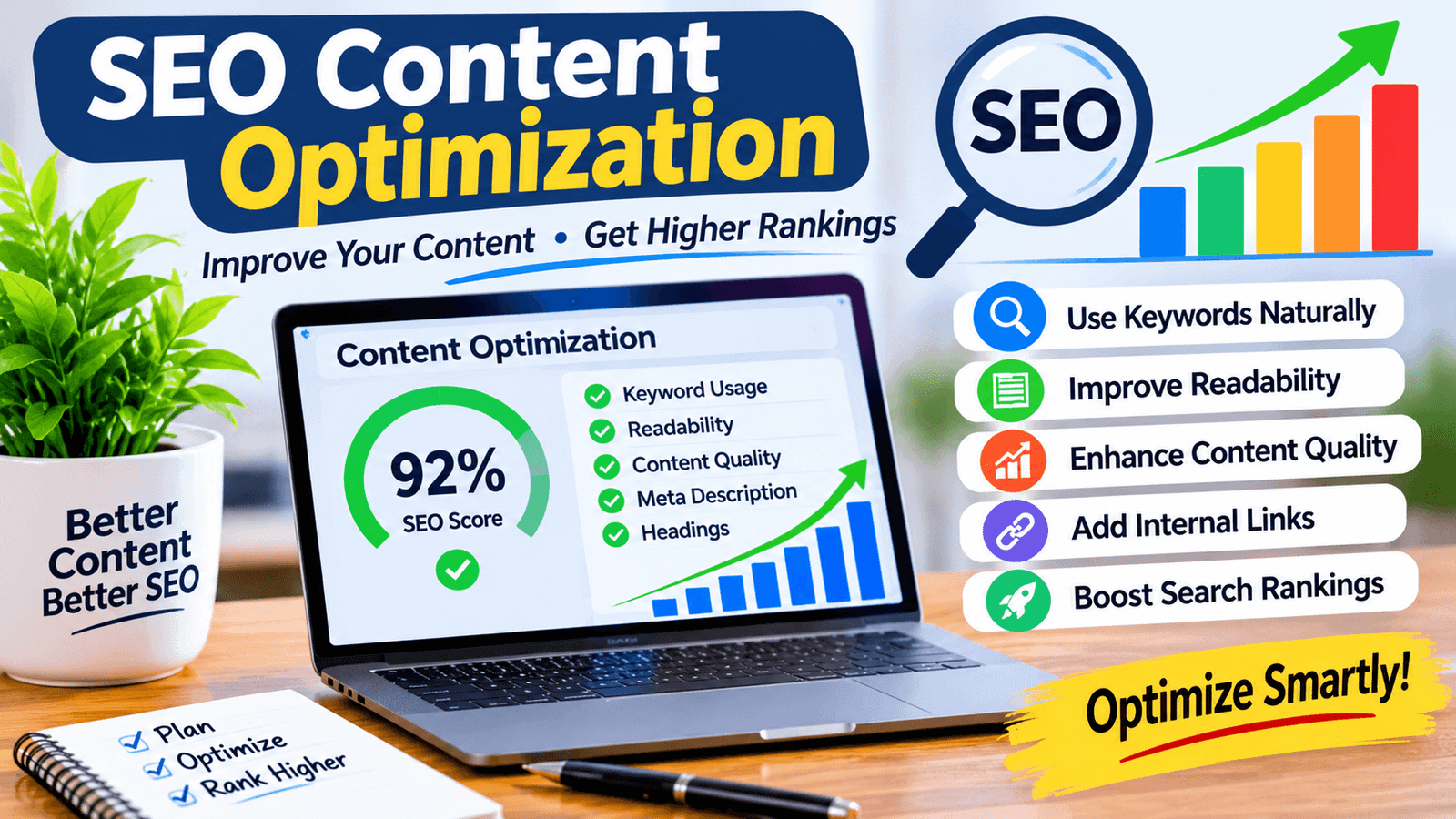
Your SEO title tells readers what a webpage is about and may appear as the clickable headline in search results. A good title should be clear, relevant, and interesting without making false promises. Include your primary keyword naturally when it fits. For example, “SEO Content Optimization: Practical Tips for Better Website Content” explains the topic and gives readers a reason to explore the page. Avoid repeating keywords or using exaggerated claims. Make sure the title accurately represents the information provided in the article.
9. Write a Useful Meta Description
A meta description is a short summary that may appear below a page title in search results. It should explain what readers can expect from the article and encourage the right audience to visit. Include the focus keyword naturally if it fits, but keep the description readable. Avoid writing a list of unrelated keywords or promising results that the article cannot deliver. Search engines may sometimes create their own snippets instead of using your description, but a clear and relevant summary is still a useful part of page optimization.
10. Organize Content with Headings
Headings divide an article into sections and help readers understand its structure. Use one clear main heading and arrange the remaining sections in a logical order. Each subheading should explain what the following paragraphs discuss. For a detailed SEO guide, sections might cover keyword research, readability, internal links, image optimization, and content updates. Descriptive headings make long articles easier to scan, especially for visitors using mobile devices. Include keywords in headings only when they sound natural and accurately describe the section.
11. Improve Readability
Readability describes how easily people can understand your content. Complicated wording, unclear sentences, and unnecessary technical terms can make an article difficult to follow. Use simple language where possible and explain unfamiliar terms when they are important. Break very long sections into focused paragraphs, and use examples to make ideas clearer. A readability checker can help identify sentences that may need improvement. However, do not shorten every sentence just to achieve a particular score. The real goal is to communicate useful information clearly.
12. Use Keywords Naturally
Keywords should appear where they help explain the subject. Your primary phrase can be used in the title, introduction, selected headings, and relevant body paragraphs. Related keywords can provide context and help cover different parts of the topic. For example, an article about SEO content optimization may naturally discuss content analysis tools, keyword frequency, and on-page SEO. Avoid adding phrases where they do not belong. Natural writing makes the article more enjoyable for readers and reduces the risk of keyword stuffing.
13. Avoid Keyword Stuffing
Keyword stuffing means repeating search phrases excessively in an attempt to influence rankings. This practice often makes content sound unnatural and may create a poor user experience. For example, using the same keyword in every sentence does not make an article more informative. Instead, explain the topic properly and use relevant alternatives when appropriate. A keyword frequency checker can help you identify repeated terms, but it cannot decide whether every use is necessary. Review your writing and remove repetition that does not add meaning.
14. Add Relevant Internal Links
Internal links connect one page of your website to another. They help visitors discover related information and allow search engines to find more of your website’s pages. For example, an article about SEO content optimization could link to guides about keyword density, keyword placement, content analysis, or keyword counting. Use descriptive link text so readers understand what they will find after clicking. Only link to pages that genuinely support the topic. A few useful internal links are better than adding many unrelated links simply to increase their number.
15. Use External Links Carefully
External links point readers to other websites. They can be helpful when you want to support a statement with reliable information, recommend an official resource, or explain a topic in greater detail. Choose trustworthy and relevant sources rather than linking to random websites. Make sure the linked page provides real value to your readers. External links are not a guaranteed ranking shortcut, so use them when they improve the usefulness or credibility of your content.
16. Optimize Images for SEO
Images can make an article more interesting and help explain ideas that are difficult to describe with words alone. Choose images that are relevant to the subject and use descriptive file names. Add alternative text that explains the image for people using screen readers and for situations where the image cannot load. Compress large image files to help pages load efficiently, and use suitable image dimensions. Avoid adding decorative images that make the page slower without improving the reader’s experience.
17. Make Content Mobile-Friendly
Many people visit websites using smartphones, so your content should be easy to read on smaller screens. Use a responsive website design, readable font sizes, and clear spacing. Make sure images fit the screen and links are easy to tap. Avoid layouts that require visitors to zoom in or scroll sideways to read normal text. Mobile usability is part of the overall page experience, and a well-designed mobile page helps readers access your information comfortably.
18. Use Content Optimization Tools
Content optimization tools can help writers review articles before publishing. Depending on the software, these tools may check keyword frequency, word count, keyword density, readability, headings, and repeated words. Some advanced platforms also provide topic suggestions and competitor comparisons. These tools can save time and make editing more organized, especially when you publish content regularly. However, do not follow every automated suggestion without checking whether it improves the article. Your knowledge of the topic and your readers’ needs should guide the final decisions.
19. Update Old Content Regularly
Older website articles may contain outdated facts, broken links, or information that no longer answers readers’ questions. Reviewing these pages helps keep your website useful. Check whether the article still matches the search intent, update information that has changed, and improve sections that are unclear. You can also add relevant examples and links to newer resources. Do not change the publication date or add words without making meaningful improvements. Every update should make the page more accurate, helpful, or complete.
20. Improve Page Loading Speed
A slow website can frustrate visitors and make it harder for them to access your content. Large images, unnecessary scripts, poor hosting, and unoptimized themes can affect loading performance. Compress images, remove plugins you do not need, and use reliable hosting. You can also test your website with performance tools to identify technical issues. Content optimization is most effective when readers can access the page quickly and comfortably. Good writing should be supported by a website that works properly.
21. Measure Your SEO Performance
After publishing an article, monitor how it performs. Search performance tools can show impressions, clicks, search queries, and average positions. Website analytics can help you understand how visitors interact with your pages. If a page receives impressions but few clicks, you may need to review its title or description. If readers cannot find useful information, consider improving the content itself. Do not judge a page only by its ranking on one day. Search performance can change over time, so review trends and make improvements based on useful data.
22. Common SEO Content Optimization Mistakes
Some writers focus only on keyword counts and forget about the quality of the information. Others create headings that do not match the paragraphs below them or add unrelated keywords to attract more searches. Publishing copied material, ignoring spelling errors, and using misleading titles can also damage the reader’s experience. Another mistake is expecting a content score to guarantee rankings. Tools can identify possible improvements, but they cannot replace research, accuracy, and careful editing. Review your article as a reader would and make sure every section has a clear purpose.
23. Best Practices for SEO Content Optimization
Start with a clear topic and understand the questions your audience wants answered. Research a suitable primary keyword and related phrases before writing. Create a useful outline, write original information, and organize it with descriptive headings. Review readability, spelling, keyword usage, images, and internal links before publishing. Make sure your page works well on mobile devices and loads efficiently. After publication, monitor performance and update the content when meaningful improvements are needed. Following these practices creates a strong foundation for long-term SEO work.
24. Conclusion
SEO content optimization helps website owners create pages that are useful, organized, and relevant to their audiences. It combines keyword research, natural keyword placement, clear headings, readable paragraphs, useful links, image improvements, and regular updates. Content optimization tools can make the process easier by highlighting possible issues and providing helpful analysis. However, no tool or writing technique can guarantee a top search position. Focus on answering readers’ questions, providing accurate information, and maintaining a good website experience. A consistent approach to quality content gives your website a stronger foundation for organic growth.
Short Paragraph
SEO content optimization helps improve website articles through better keywords, readable writing, clear headings, and useful information. Use keyword checking and content analysis tools to review your work, remove unnecessary repetition, and create helpful pages that serve your readers.